The point about fragility of LEI kites initially concerned me, but in reality, is only valid if you’re considering flying low over a populous with childish gun habits. In that environment you’re number of hours surviving a kids bb gun party assault may be valid… otherwise LEI has good enough reliability statistics that you can schedule servicing and replacements as needed.
Yes it likely has higher O&M cost, but better performance in given markets.
In offshore wind, Heck LEI has an advantage in sudden calm you can more easily recover a fallen asset.
Horses for courses.
AWES is not 1 AWES. There’s a lot of sky, with very varied weather, over a lot of different terrain, close to some very weird humans.
1 Like
I posted this analysis after reading it for a few minutes. Reading it again, these notes seem even more relevant.
They only concern the different kinds of flexible power kites and their respective ability to scale, as well as their respective iso or aniso shapes concerning some SS and NPW power kites.
Rigid wings are not directly evoked in this analysis. However, considering the results obtained so far, it can be deduced that the AWE research field could be more focused on flexible wings, above all if we consider that AWES should keep their initial goal: harnessing high altitude winds. Just compare the results of Skysails using flexible power kites, and those of all projects using rigid wings (except projects with rotors): there is no photo.
A summary of power kite options below:
https://www.hardwaterkiter.com/kites.html
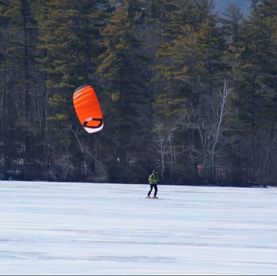
Dual Skin Foil kites
Dual Skin, also known as Ram Air kites or Foil kites, are one of the most commonly used kite type used by the most dedicated kite skiers.
They come in a variety of designs from “Open Cell” to “Closed Cell” to “Single Skin” and a few in between. Foil kites are characterized by their “parachute” like appearance, intakes (vents)in the leading (front) edge and bridles (strings) that support the kite’s shape and have a somewhat “bumpy” aka “Air Mattress” appearance due to the individual cells.Dual skins can be equipped with “closed cells” meaning that it has the ability to be used on water and won’t immediately take water into the intakes. This makes for a great option if you are a year round rider wanting to ride water, but don’t want the expense of two dedicated kite quivers.
Once the most popular snowkite type, they are losing ground to the new single skin types due to cost, durabilty and ease of use. However they arew still in favor with kiters looking for more perfomance than a single skin can offer.
Single Skin Foil Kites.
Single skins are essentially a foil kite but without cells due to the lack of lower skin (Intrados) on the wing. The result is a kite that is lighter and impervious to over pressure damage than can occur when crashing a dual skin kite leading edge down. Single skins tend to have more power per size and are intended mostly for touring purposes in addition to being ultra compact so its easy to carry more than one on a tour. The flight quality is generally very good but do to their nature they aren’t as “smooth” as a dual skin though that has improved greatly in the last 8 years.They are fun, forgiving an even water relaunchable. They have an amazing amount of “drift” (float without being powered by the wind) which is a benefit when riding downhill after a climb, when you fly into lulls or when riding surf especially on a foil board.
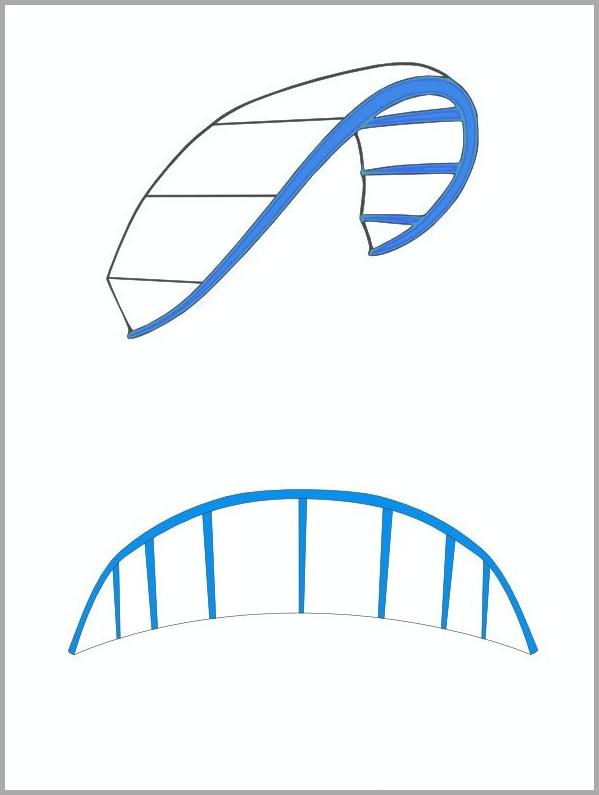
LEI Kites (Leading Edge Inflatable kites) tend to be “C” shaped, have rigid air filled “Struts” that support the shape of the wing and no bridles. These are the most common kite you see on the water and they are best suited for that use.
They require pumps to inflate the frame and get the kite into it’s required shape to fly. As many of the components for this are plastic and inteded to be used in warmer conditions, this can be problematic in the cold. They also have bladders that support the rigid structure while inflated that can leak.
They have minimal bridles or sometimes none at all which a lot of people prefer and they hold their shape well in shifty winds and generally are simpler to fly than some foils.
They have a smooth appearance due to the lack of individual cells.
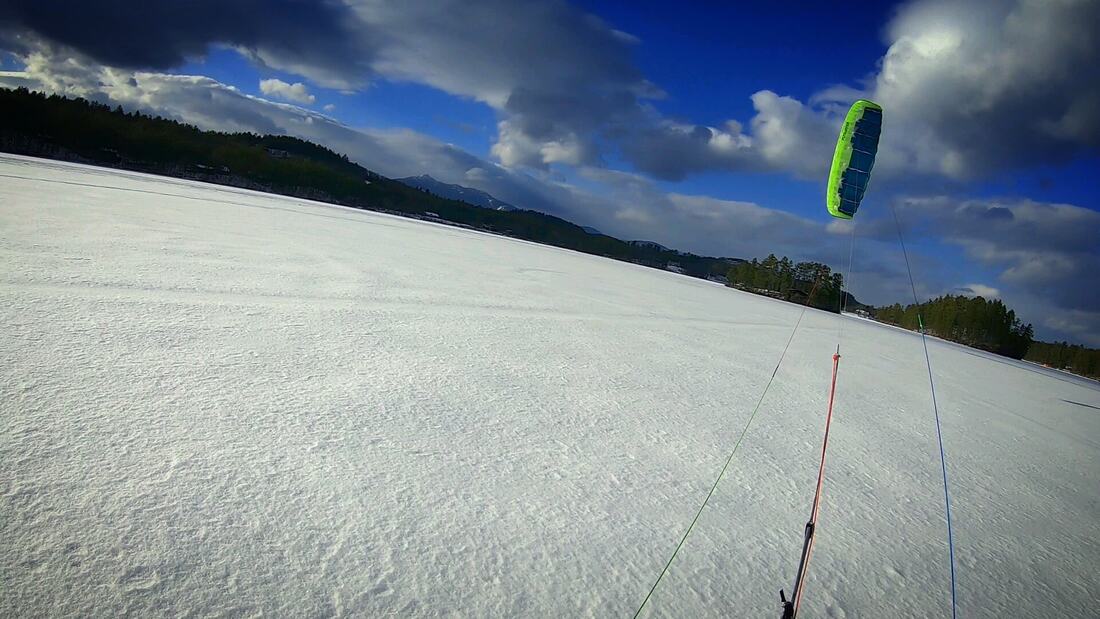
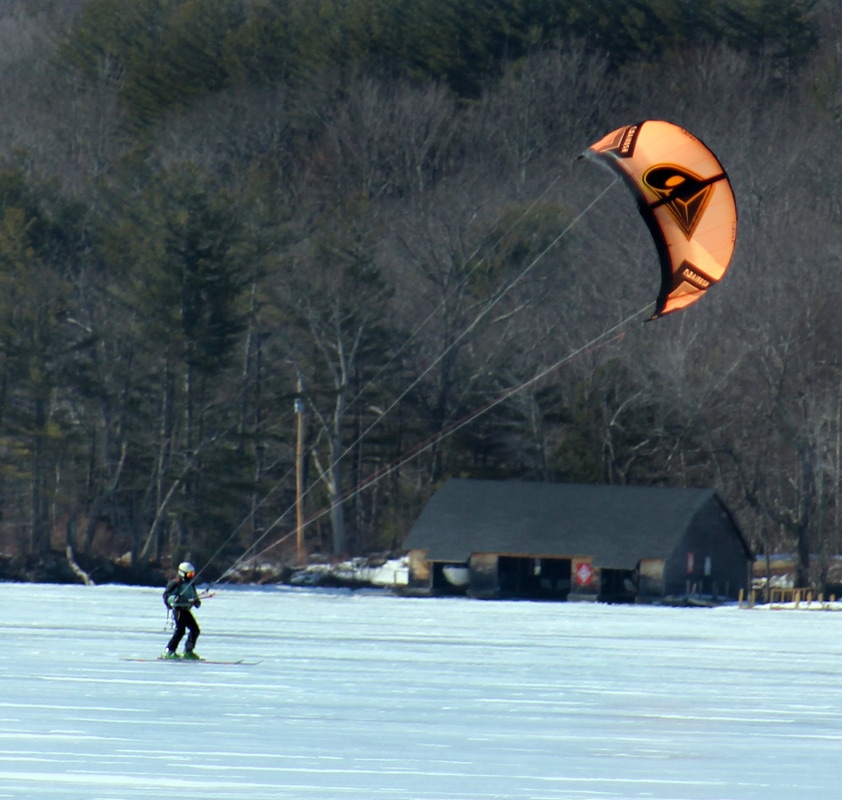
A kite is a kind of kitesurfing sail, similar in some ways to a parachute. Without it you can’t do this sport — you just can’t fly anywhere. And, just like in many other sports, kites come in many types.
There are two main types of kites: tube kites and parafoils. They are fundamentally different in design and the possibilities of their use.
Let’s understand in this article the different kitesurfing kite types.
Foil kites or parafoils
A foil kite looks like a parachute or wing. Its canopy doesn’t have a rigid frame, so the shape is maintained by the oncoming air flow, which enters through special air intakes. In closed-type parafoils, these air intakes are closed by valves — because of them the parafoil is ‘afraid of the water’. If it falls, water can get into the valves and the kite will lose its flight properties.
A parafoil is lightweight and compact, more durable, and frost resistant. But it’s more difficult to control and less stable under strong gusts. Choose a foil kite for snowkiting, high-speed rides, for riding only in light wind (less than 5 m/s) or only at air temperatures below -20 ° С.
If you are planning to use the kite for riding on water, choose an inflatable one.
Tube kites or leading edge inflatable kites
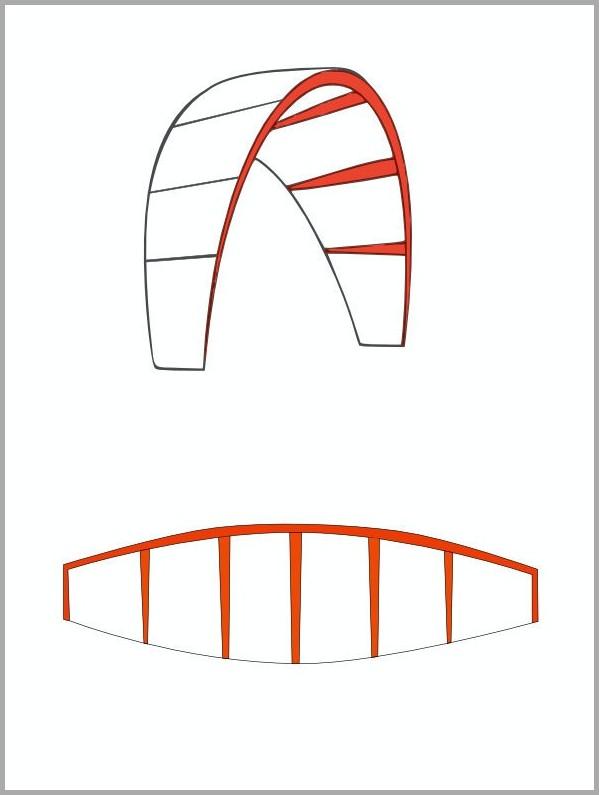
The frame of such a kite is created by inflatable balloons, which are located along the leading edge of the wing and across it. Inflatable kites don’t sink, are easily restarted from water, have a wide wind range, and are well controlled in gusts. It is better to start and land such a kite from the shore with a partner, because hitting the surface too hard may rupture the balloons or bubble.
In addition, today there are several basic types of inflatable kites:
C-kites
C-kites have an arched dome profile and rectangular ‘ears’ — similar to the letter C. C-kites are characterized by fast dome turns, high thrust, and narrow wind range, and are difficult to restart from water. This kite type is suitable for experienced kiteboarders and is designed for freestyle. It’s not suitable for beginners, nor is it used for freeriding or racing.
Bow-kites or SLE-kites
It got its name from its ‘flat’ dome with a larger working area. They have a wide wind range and a high level of safety. Bow kites are easier to restart than C-kites and have better thrust release. Suitable for beginner kitesurfers.
Hybrid kites
Hybrid kites have the advantage of bow kites and intuitive C-kite handling. These kites are sure to have a support leading-edge (SLE), a C-arch, a high level of safety, and a good restart. This kite type is suitable for confident kiteboarders and is designed for freeride, freestyle, and wave riding.
Delta kites
Seen from above, they look like the letter D. Delta kites are characterized by easy restarting, steady behavior, and wide wind range. This kite type is intended for freeriding, but it can also be used for practicing the initial freestyle tricks. Great for beginner kiters for training.
Learn more about how to read the surf / swell forecast in a special Windy.app presentation with examples and tips from professional surfers with many years of experience of riding the biggest and best waves on the planet.
Text: Natalia Kirasheva
Cover photo: peggy-anke / unsplash


1 Like
Kite sports are evolving rapidly. Kitefoiling, now Olympic, uses foil kites with a very high aspect ratio and other features as described below.
https://www.kiteworldshop.com/en/freeride-kites/8665-flysurfer-vmg-2-kite.html
Hydrofoil | Race
The VMG: revolutionary, highly efficient, extremely fast. The FLYSURFER technology showcase is a masterpiece of German engineering specially developed for the Olympic hydrofoil kite racing sports. Tested in competition, untouchable on the racetrack, easy to maintain. Increase your performance and leave your competition behind!
VMG … born on the racecourse
The VMG is a revolutionary concept in hydrofoil racing that is the pinnacle of 5 years of development in high-performance closed-cell foil kites. It is created to put cutting-edge technology in the hands of world-class athletes, who are striving for the Olympic gold medal. The mission was to create a fast and easier to ride wing that inspires the next generation of kiters or sailors.FLYSURFER’s R&D mastermind Benedikt Boelli gathered our top racers to mark a huge step forward in the evolution of kite-design to develop the world’s first two bridle level (A,B) race kite. The VMG changes its angle of attack in a highly effective manner in contrast to the conventional change of the profile camber without the help of an additional Z-level. The entire wing has been extensively modified with redefined profiles, optimized aspect ratio, lightweight materials, and the fiberglass rod-reinforced upper sail construction to gain the highest amount of rigidity to enable an insane reduction of total bridle lines. We added different sizes and fine-tuned every kite’s aspect ratio, cell count and adjusted their attributes to the weather conditions requirements, to ultimately build the fastest kite on the racetrack.
Upon unpacking the VMG, it shines with straightforward simplicity and a unique bridle system that distinguishes it from all our foil-kite products. The complexity of use over time with high-performance wings is one of the biggest challenges of kite-racing: Only the athletes who are good at maintaining their equipment remain competitive. We strongly focused on a drastic reduction of trim sensitivity. The VMG is in a league of its own with how linearly the twisting is distributed from its center to its wingtips when steering. Less time trimming and learning how to trim means more time on the water.
FLYSURFER wants to especially thank Theo de Ramecourt, Nico Landauer and Florian Gruber for spearheading the development of the VMG, a kite born on the racetrack.
Key Features:
- Two-Level Bridle Design (A, B)
The first competition kite with a two-level bridle design in the history of kite sports. The low-stretch Edelrid Kevlar-bridle reduces drag to an absolute minimum and activates the VMG’s incredible upwind performance. The innovative kite changes its angle of attack in a highly efficient manner in contrast to the conventional change of the profile camber over the Z level. The net result: the best angle as well as maximum speed on the racetrack.- Rigid Airfoil
The two-level bridle design requires a particularly rigid internal construction to perfectly support the reduced bridles. The profile of the VMG is additionally reinforced with fiberglass rods integrated into the internal rib construction. The rods are protected at the ends and can be replaced. The VMG hardly deforms, the flow is clean and it has a high level of stability in the air, which constantly inspires confidence to push the limit.- Smooth Leading Edge Technology
The VMG gets a special material mix: Inelastic Skytex32 on the leading edge, proven X-Light top and bottom sail as the best combination of weight and robustness and to support the inner structure, TX-Light hard finish rib material. The use of these high quality materials enables a very rigid wing and particularly low deformation from the center to the wing tips. The bridle lines therefore change very homogeneously, which has a positive effect on the stretching and shrinking of the construction, and the maintenance time is significantly reduced.- Speed Mode
The VMG is controlled by a one pulley on each wing side and has no mixer, the feeling this gives is unique. The holding forces increase continuously with the force development of the kite, which enables defined and precise feedback at the bar, as if you had the entire surface of the kite in your hand. The profile only changes its angle of attack and gives you access to an enormous wind range, the ratio of power to depower is phenomenal.Technology: Closed-Cell Foil Kite
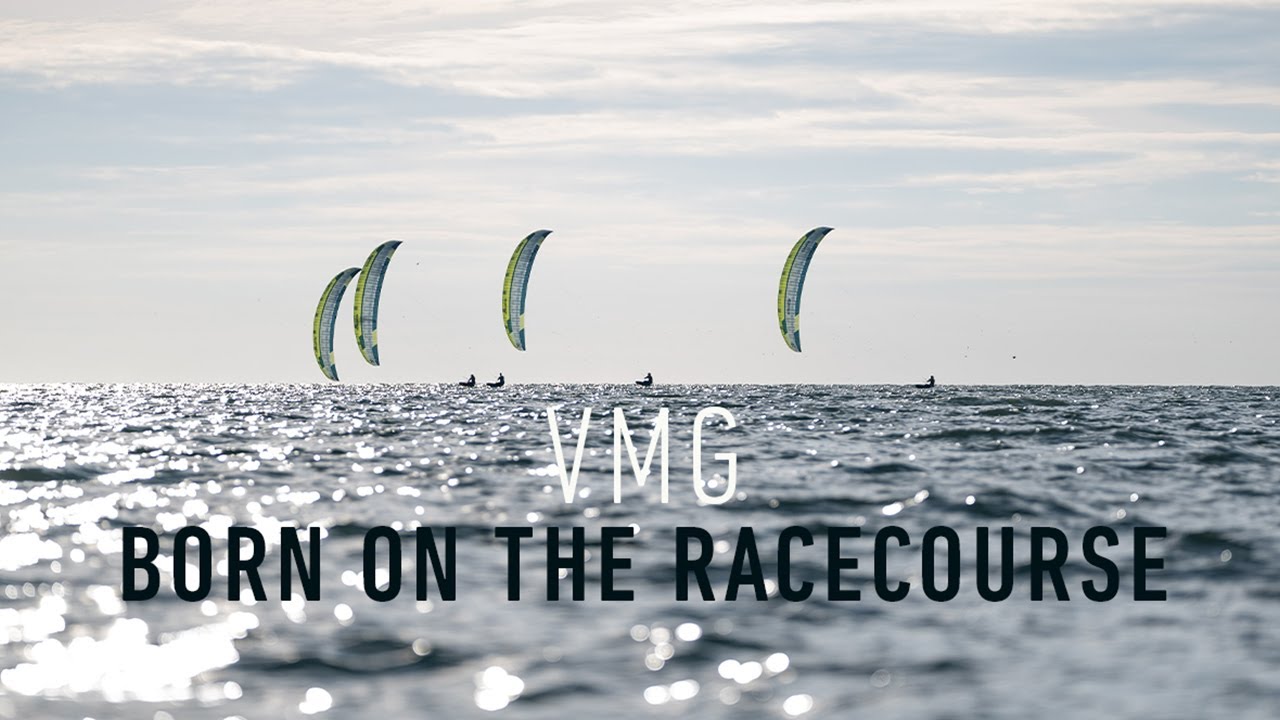
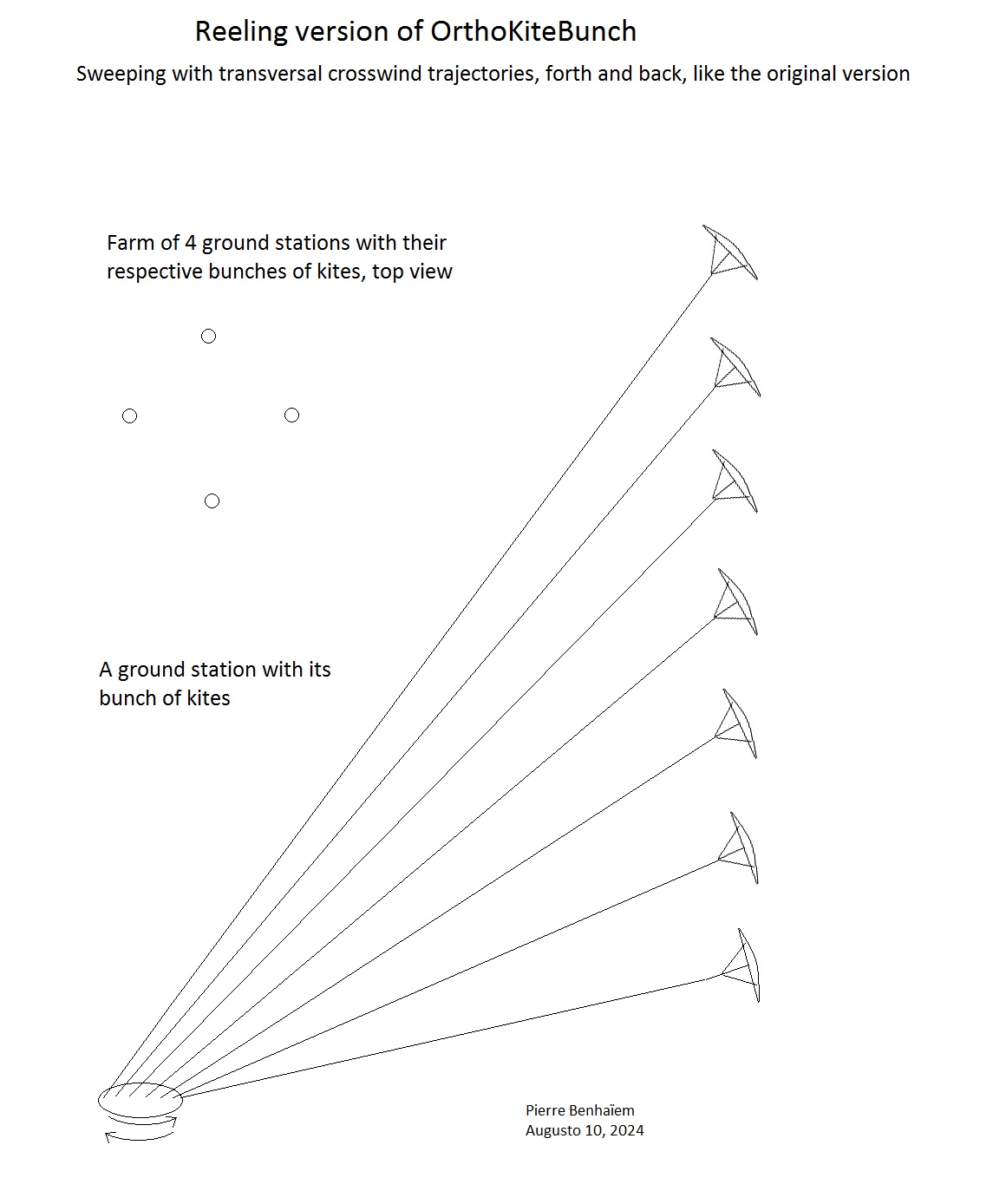
On the video below, we can remark that the VMG flies very close to the water level, in an almost vertical position, being very stable and controllable in addition to be fast and powerful. This can be an advantage for an AWE use, considering superimposed unities connected to their respective ground stations, operating in reeling yo-yo mode, and sweeping a large area by flying by transversal (horizontal) crosswind trajectories, forth and back.
A sketch of a reeling version of OrthoKiteBunch I presented to the 21st World Energy Congress Montreal 2010 https://www.osti.gov/etdeweb/servlets/purl/21505319 :
1 Like