Artificial Idiocy is running rampant lately.
I think you guys are wasting your time.
If you don’t know what you’re doing by now, more screen-time chasing after the latest sexy buzzwords is not the answer.

I still think there is great hope for AI to quicky perform analysis in ways we have as yet been unable to. I think it can also generate forms and structures we have as yet not considered.
And I’m by no means writing off the Network Kite AWES output D Santos steered.
Here’s an example of what an AI infographics generator can do to help us…
Synthesizing D santos first chapter from message 143 Advanced Kite Networks - #148 by PierreB
We can transform an otherwise a long text into 7 simple to ingest graphics
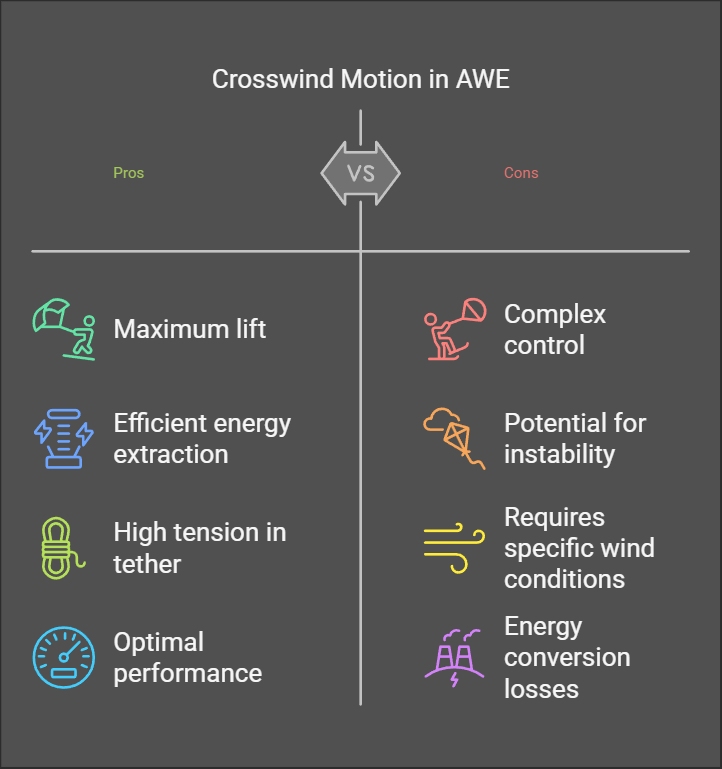
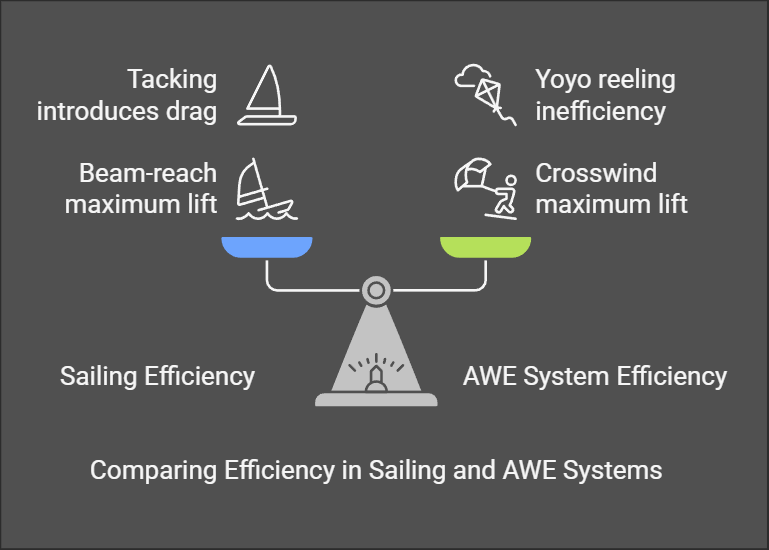
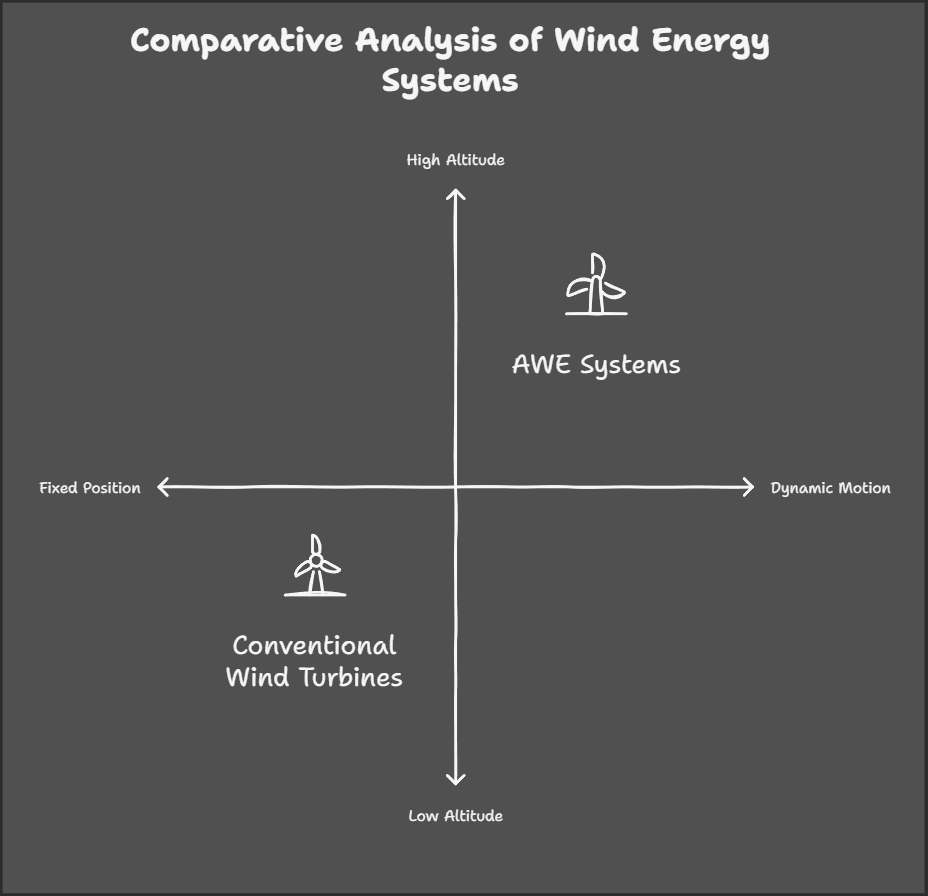
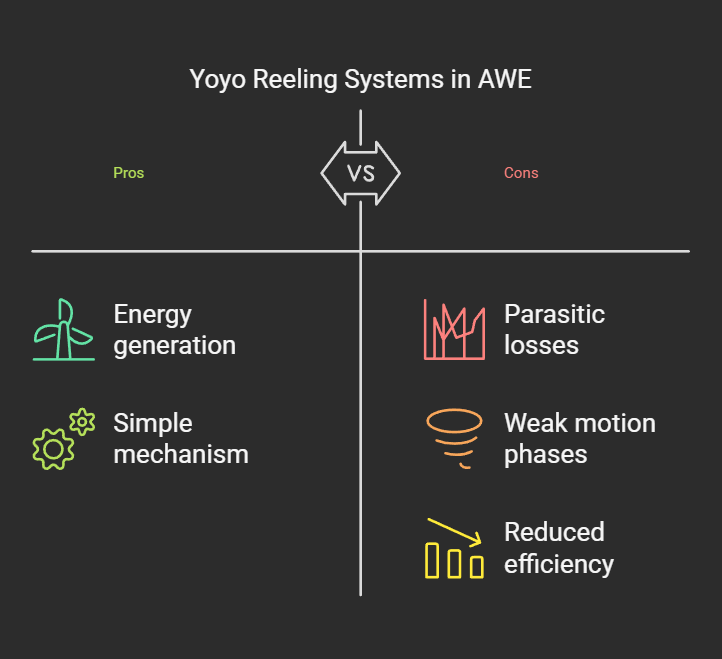
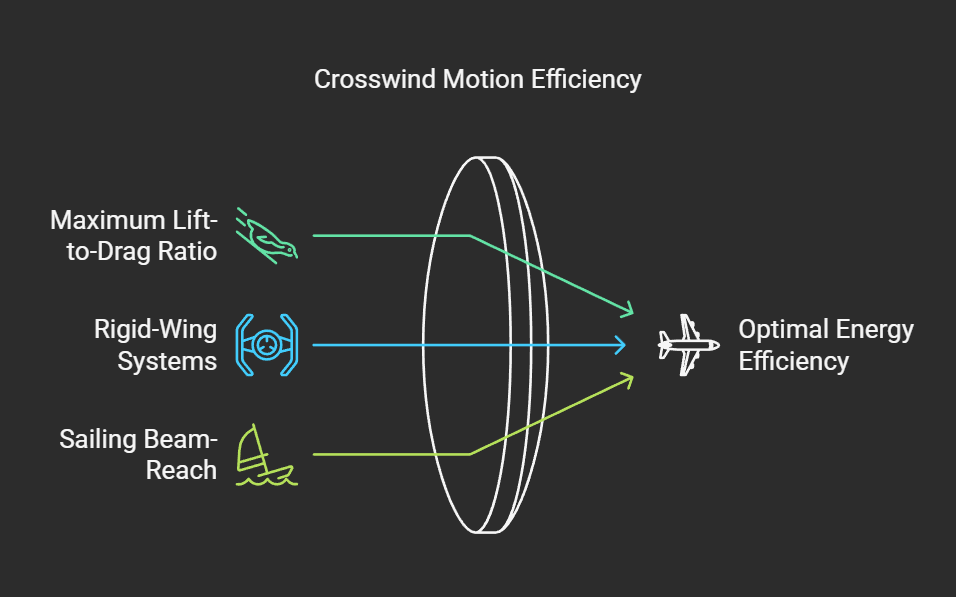
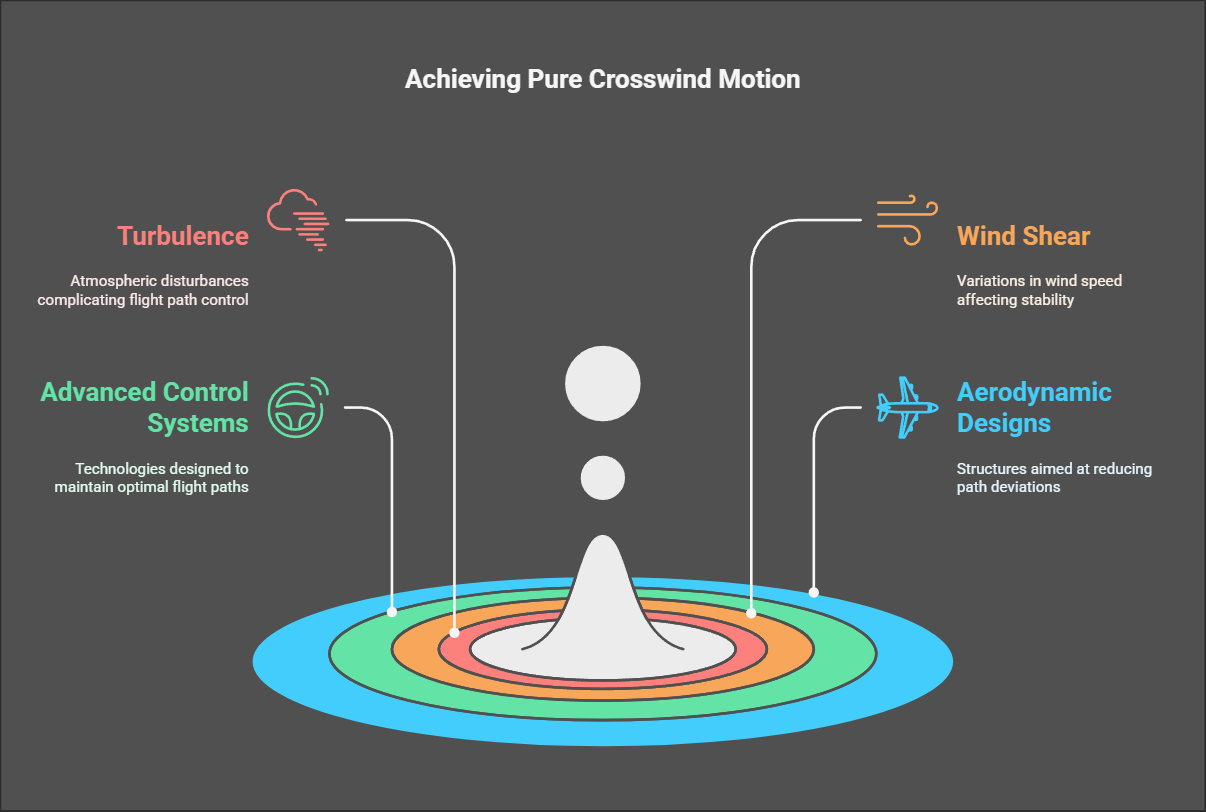
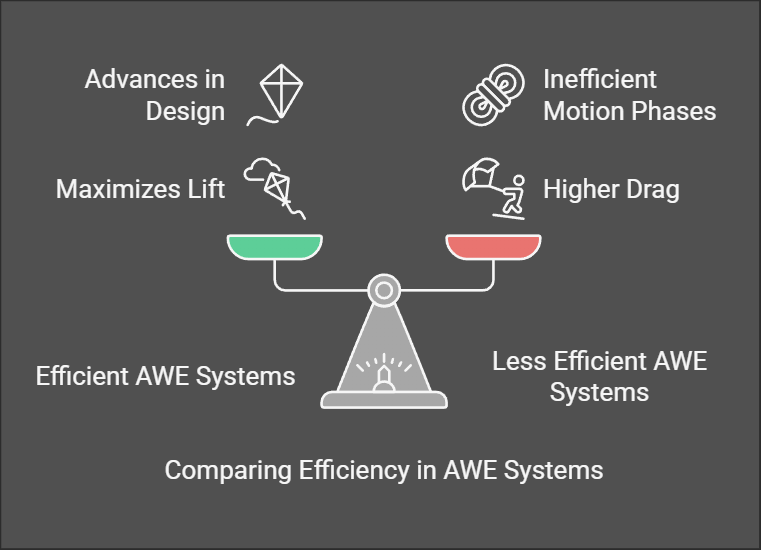
Does that do anything to improve the quality of the information, other than to make it more accessible and easy to present and retain as a model? No
Have we shown that AI can be helpful in assessing scientific validity and rigour of an endeavour? yes
Is all that useful?
Absolutely yes
1 Like
The AI generated stuff as presented here has many similarities with some posters previously submitting a lot of text to the forum. Seems to be knowledgeable at first glance, but digging deeper you see its just repeating fragments of other stuff glued together in a neat way. It does not want to touch concrete statements with a fire rake, as if that was done, others could fact check or debunk those statements.
I think AI has its place, right now for finding information it can be excellent, and improve productivity for a human by a measurable percentage. In the future AI may be better than us at logic thinking, and may be able to introduce novel ideas to the AWE space. Like, self driving cars, that AI id still many many years away. It’s hard to see current AI limitations, and add a little wishful thinking, you may be inclined to think AI is smarter than it is. And it is a great bullshitter.
But, the proof is in the pudding. Show me AI output that introduces something new to the AI space, and you would have got my attention (and incidentally, my importance in AWE would be reduced to nothing)
Sad thing is, such an AI may debund AWE altogether 
1 Like
Good points @tallakt
When I asked DeepSeekV3 about Networked Kite AWES it cambe back with at first seemingly relevant answers then I realised oh hold on
Makani, Ampyx, KiteX, Kitemill, Kitepower, TU Delft
Apparently they were all leaders in various network kite AWES blah blah
likely down to my poor context setting and the fact that I am overly familiar with what I understand as network kite and just expect the machine to know what I do…
1 Like
You’re going to see a stock market crash from this whole overhyped A.I. meme, like the dot-com crash of 1999-2000. We may end up in a depression.
The yield curve was recently inverted further, and for longer, than any time in history. For anyone with even a cursory knowledge of economics (probably not here, any more than even a cursory knowledge of wind energy), that predicts a huge recession.
A.I.: Keyword: “Artificial” - it doesn’t have any actual intelligence, as one can see from watching (mostly A.I. generated) YouTube videos lately.
Like I said, if you don’t know what you’re doing by now, “A.I.” is not going to save you!
Has very little to do with the topic but thanks @dougselsam
So I am doubtless clueless about what this money thing you talk of is so I asked perplexity (An AI)
Basically explained it to me and said you’re right - significant indicator precursor to recession.
As you can guess I’m a lot more positive on AI
I recommend - Don’t look at what’s generated today - Look at the trend and the enabling factors.
There are many software structure scale enabling factors - And they keep coming.
And the crazy thing is it’s now self improving.
I think you’d like Wes @dougselsam
Enough of that AI chat because I used to think one of the leading lights in Kite Network conceptualisation (who must not be named on this forum) was a text robot ~10 years ago.
From the 20 flame fuelled spam emails I received from that robot today ~ I may have been right.
Calm down Mr Unmentionable. The world isn’t out to get you.
(Shot myself in the foot here again haven’t I…)
Everyone CALM down - The AI is coming
It’s just a bit pish yet at some of the longer chain more complex jobs…
However
Look at this folder I created tonight
Instructions and software all coded out on a massive project to design, test and evolve kites in rhino an gh
Doesn’t work right yet but I’d have paid a fortune for a human to generate this pish
Kite Test Generators.zip (284.2 KB)
So far Advanced Kite Networks have not shown the beginnings of feasibility (conversion system, power kite network, and so on?), nor the slightest proof of concept.
It is therefore normal that AI cannot seriously validate something that we do not know if it could work.
This does not prove that AI is invalid.
Well fair point @PierreB
I got an AI to make a kite simulator for me this morning and the result looks realistic
You didn’t expect the first few experiments to be other than catastrophic crashes did you?
Fail fast
1 Like
I cannot even begin to imagine the amount of mental pain I have avoided learning all that awful coding
using an AI to get that far
I have a half capability of looking at and understanding what the code says
but damn I couldn’t have done even that in 100 years
Hi Rod: It started out as endless 3-D rendering that was going to be the magical answer that was going to solve AWE. And patents “were bad”. Next it was “3-D printing”. And by that time patents had become “good”. Today it’s “A.I.” - whatever the “I” actually stands for.
While these are all interesting technological developments, none of these magical, trendy, sexy buzzwords is a substitute for knowing what one is doing in the first place, and the ability to think creatively. Our brains are still far more capable than any artificial electronic machine or lines of code.
1 Like
And by the way, this entire “topic” is mere fantasy over contrived buzzwords and is intentionally misleading, in my opinion. Anyway, so with this latest computer, it came with microsoft’s “edge” web browser, that is actually a big time-waster, cuz it constantly tempts the user with a page full of clickbait “news” stories from MSM, many of which are ads.
So I open a new tab in a browser and am immediately barraged with thumbnails of tempting “news” stories that seem like they might be interesting, like this one that I just watched:
Clean Energy Solutions with Advanced Wind Turbine | Watch
Now it’s funny but, someone could have a PhD in anything BUT wind energy, and believe this “new” turbine design is indeed “advanced” (just like this topic - see how redundant all this is?) because it hits a few pretend buttons pre-installed in their PhD-yet-wind-ignorant brain: It’s bird-friendly! (Cuz they implanted that thought into his brain.) It’s quiet! (cuz it doesn’t do much of anything, and they lied and said regular wind turbines “scream”). Regular turbines function just like airplane propellers! (Well, sort of opposite to airplane propellers, but anyway, bad, bad, bad.) The “advanced” turbine functions like an airplane wing! So it spins! (like an airplane wing???) And it features a vertical axis of rotation! (That’s never been done before, right? right???)
And it places the generator near the ground - (cuz nobody associated with the article or project knows even the most rudimentary thing about wind energy, such as placing the turbine up high where the wind blows.) And of course they never mention why most motors and generators are mounted with a horizontal axis, (which is the bearings are way happier when the weight is parallel to the plane of rotation of the rotor).
Why do “they” never mention this? Well, first of all because “they” know nothing about wind energy - of course! What fake-article-writing “author” does know anything about wind energy? None? That’s why “they” “wrote” this “article”.
But the other reason is “they” are A.I. software. If you pay close attention to the “writing” and the resulting “narration”, its only too apparent it is not human-generated. So this illustrates the grasp A.I. (Artifical idiocy) actually has on really anything - including, and maybe especially, wind energy.
And maybe now you can start to see it really IS just one more extension of existing “idiocy” - artificial, but a fairly good imitation of a complete idiot human trying to sound like they have any idea what the heck they are talking about, which most don’t.
Garbage-in => Garbage-out. Just like the origin of this thread. “Advanced”. Yeah, sure. Maybe we should start selling T-shirts that say “Wow, I’m really advanced”!
1 Like
In spite of all I’ve warned about regarding “A.I.” and 3-D printing, I just saw this:
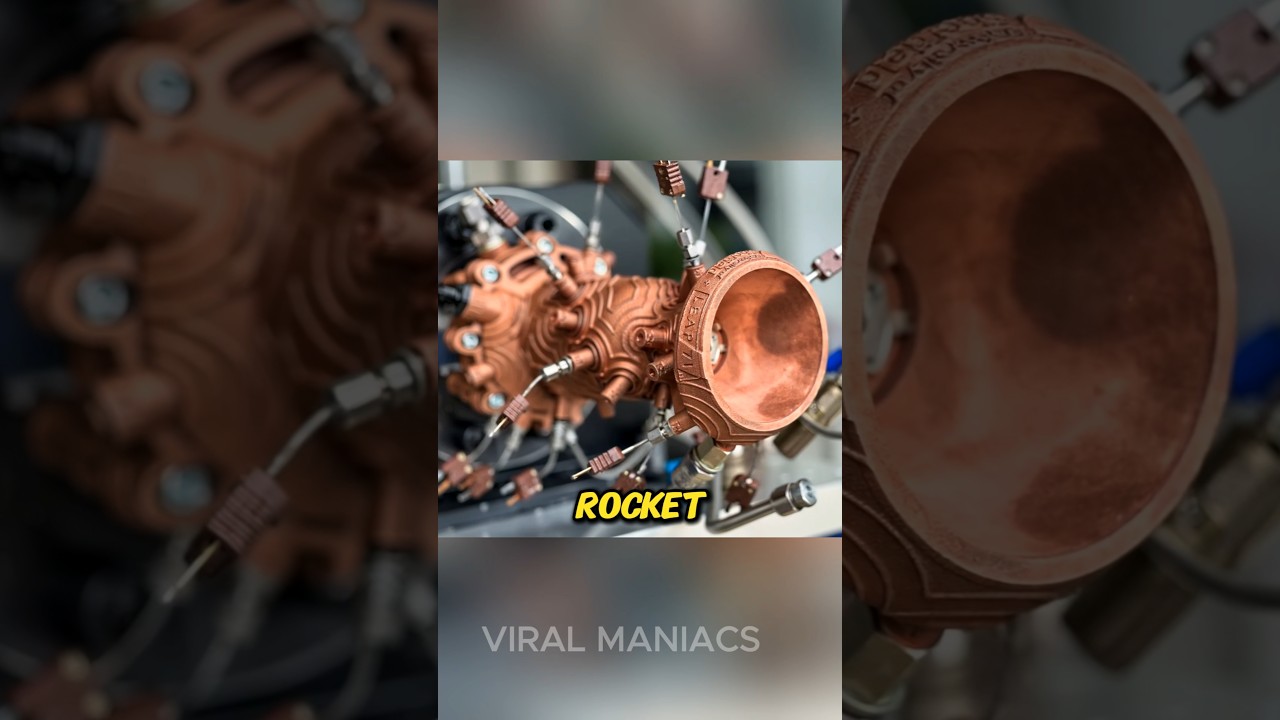
Here’s a link to the company:
LEAP 71 | Engineering the Future
They claim their rocket engine “worked” on the first try.
Only thing is, (like “AWE”) do they have anything USEFUL?
For any actual purpose?
How WELL did it work?
Is it anything beyond an attention-getter?
One more “game-changer” press-release breakthrough?
I look at Boeing as an example.
Boeing was once able to design airplanes - back before the ubiquitous use of (dependence on) computers.
A bunch of people actually skilled in airplane design, used slide-rules and pencil-and-paper, to design the airplanes we still manufacture and use today.
The problems with the 737 Max are because it was decided that they CAN NO LONGER DESIGN A NEW AIRPLANE!
Nope, between the dependence on computers, and the takeover by “bean-counters”, their hands are tied. It would cost too much to design a new airplane for the new, larger-diameter, more fuel-efficient, high-bypass-ratio engines. (Global warming, doncha know…)
So, once again, they decided to “fix” the problem, by sweeping it under the rug with software. Somehow their combined genius placed everyone’s life dependent on a single sensor known to fail, and a computer that took the controls from the hands of the pilots! Can you say “bad dream”?
And their 737 Max planes started crashing in spite of every desperate attempt by the pilots to use their actual controls to save everyone onboard. Flown right into the ground by software! Today Boeing remains unable to design a new airplane.
If you ever fly on a 737 Max, realize your life is in the hands of a software band-aid on a flawed design band-aid, all based on an admitted inability to design a new “clean sheet” airplane, because, well, they don’t even USE “clean sheets” anymore! Nope, they’ve got their heads stuck inside their computers! Or their asses - take your pick!
I’m thinking maybe someone needs to take all their computers away and give them paper and pencils and maybe some calculators, since they probably would not be able to get up to speed using a slide-rule… Maybe the answer is “step away from the computer”, and get engaged in real 3-D life again!
I’d love to say you’re wrong Doug
But I have to get back in the garage
This is the best version the AI was able to make of a kite simulator for me so far
Some way to go yet
1 Like
3 seconds of jiggling and a clothy thing falling over…
What does that remind you of?


That’s an advanced kite network test by … Must not be named
For sure
Ironically, I was just spoon-fed this article from MSM, about how airplane manufacturers on both sides of the pond are suffering from all the people who know what they’re doing (“shop-rats”) retiring, and the new kids just want to sit around playing with computers, rather than learn to build anything.
i think we are actally quite aligned here. The «top boss» of a technical company makes or breaks success. But the mechanisms to select the «top boss» in a large, stable company is not aligned with being the top thinker. This is why humanity is not stable, which is actually a good thing
There is another important aspect. Human nature is basically constant. So young people are as likely as old ones to be clever. But young people in aerospace are not exposed to design, flight and so on, because that doesnt make sense for a mature industry, so they could never become great…
1 Like
I’m trying to decipher. And if these young people moved into a less mature industry, they would be exposed to design and could become great.
Staying in the aerospace field, what’s left? AWE, of course.
2 Likes
So a while back in the messages on this post
I got Cline (Claude AI in VSC) to generate 739 concepts for kite networks
Today I got Deepseek to flood and jam 800GB of rubbish into my hard drive - oops
After recovering from that
I got Gemini in Cline to compile the 739 files into a single (Because Rod almost never scripts) input for NotebookLM
Asked it to consider an upland hill farmer and from the concepts, select the most focussed and appropriate solutions and compile them as a business proposal for that customer. (not necessarily the most appropriate technologies for me or you to develop given our resources…)
So as you can imagine, it spewed a colossal list of potential developments…
Jeeezoh patent these someone 
Blockquote
Here’s a business proposition plan for an upland hill farmer, focusing on relevant design concepts and ideas for a kite power network airborne wind energy system, compiled from the provided descriptions:
Business Proposition: Kite Power Network for Upland Hill Farming
Introduction:
This proposal outlines a tailored airborne wind energy system (AWES) specifically designed for the needs of an upland hill farmer. It leverages the unique advantages of kite-based wind energy to provide a reliable, sustainable, and cost-effective power solution, drawing on advanced design concepts and ideas found in the sources. This system is designed to be robust, adaptable, and low-impact, making it ideal for the challenging conditions of upland hill farming.
Key Design Concepts & Descriptions for an Upland Hill Farmer:
•
Hybrid Vertical-Horizontal AWES (HVH-AWES): This system combines both lifting and rotating elements. This dual-mode capability allows the system to adapt to different wind conditions common in upland environments, capturing energy efficiently. The modular design makes it adaptable to the specific site.
•
Modular Multi-Function Airfoil AWES (MMFA-AWES): A versatile airfoil system featuring modular components that can be quickly reconfigured to optimise performance for different operational modes and environmental conditions. This is particularly useful as it allows for interchangeable sections and rapid assembly.
•
Adaptive Dynamic Anchoring System (ADAS-AWES): This system dynamically adapts to changing loads and environmental conditions through active monitoring. It uses smart materials and distributed sensors to ensure stability, which is crucial in exposed upland areas.
•
Modular Distributed Anchoring Network (MDAN-AWES): Distributes loads across multiple interconnected anchor points to create a resilient foundation. The modular design minimises ground pressure at any single point, useful in sensitive terrains.
•
Self-Deploying Autonomous Anchoring System (SDAA-AWES): This system autonomously deploys and establishes secure ground connections. It analyzes ground conditions and selects optimal anchor points, which reduces manual labor and ensures proper installation.
•
Multi-Stage Altitude Optimization System (MSAO-AWES): This system adjusts altitude based on wind conditions, optimizing power generation at different heights. It ensures efficient energy generation even in fluctuating wind conditions common in upland areas.
•
Intelligent Wind-Layer Exploitation System (IWLES-AWES): This system identifies and exploits optimal wind layers for maximum energy generation. By mapping wind resources at different altitudes, it positions the AWES to harvest the most favorable wind conditions.
•
Light Wind Performance System (LWPS-AWES): Specifically designed for efficient operation in low wind conditions, ensuring energy capture even when winds are not at peak speeds.
•
Automated Rapid Deployment System (ARDS-AWES): This system automates and accelerates the deployment process through robotic assistance and smart guidance, making it easy to set up.
•
Modular Cost Optimization System (MCOS-AWES): Utilizes modular design and standardized components to create a cost-effective solution, vital for managing initial investment for the farmer.
•
Smart Composite Cable System (SCCS-AWES): High-performance tethers with embedded sensors and smart features, ensuring reliability and monitoring.
•
Automated Cable Management System (ACMS-AWES): Optimizes cable handling through automated deployment and smart routing, reducing manual effort.
•
Community Cooperative Energy Model (CCEM-AWES): An option for shared ownership and benefits could make the project more economically feasible for the farmer and others in the community.
•
Wildlife Detection and Avoidance System (WDAS-AWES): This system will help ensure the safe coexistence of the AWES with local wildlife.
•
Modular Environmental Adaptation System (MEAS-AWES): Uses interchangeable components to provide customized solutions for different ecosystems.
•
Predictive Environmental Management System (PEMS-AWES): Uses predictive analytics and environmental modeling to anticipate and prevent ecological impacts.
•
Self-Managing Operation System (SMOS-AWES): Enables fully independent operation through autonomous control and self-optimization, reducing the need for constant oversight.
Proposed Solution & Benefits:
Reliable Power Supply: The combination of the HVH-AWES, MSAO-AWES, and LWPS-AWES ensures consistent power generation across varied wind conditions.
2.
Low Environmental Impact: The MDAN-AWES and PEMS-AWES minimize ground disturbance and ecological impact, making it suitable for environmentally sensitive upland areas.
3.
Autonomous Operation: The SMOS-AWES allows for independent operation, reducing the time the farmer needs to spend managing the system. The SDAA-AWES further simplifies the deployment process.
4.
Cost-Effectiveness: The MCOS-AWES, coupled with modular design, ensures a cost-effective setup and potential for community-based financing through CCEM-AWES.
5.
Easy Deployment & Maintenance: ARDS-AWES and ACMS-AWES streamline the setup process, while the robust design minimizes maintenance needs. The MMFA-AWES allows for on-site repairs and adjustments.
6.
Safety: WDAS-AWES ensures the safety of local wildlife. The ADAS-AWES and SCCS-AWES provide robust anchoring and cable systems.
7.
Adaptive and Versatile: The modular nature of this design makes the system suitable for the client’s unique needs and challenges. The systems can be scaled up or down and reconfigured as needed.
Business Model:
The proposed business model involves a partnership with the upland hill farmer, potentially utilizing the CCEM-AWES model. This means:
•
A shared investment to reduce the up-front capital expenditure for the farmer.
•
The farmer will get a reliable source of on-site clean energy.
•
Potential surplus energy could be shared or sold to the local community.
Conclusion:
This kite power network AWES offers a compelling solution for an upland hill farmer, providing a sustainable, cost-effective, and reliable power source. By combining cutting-edge design concepts and ideas with a tailored approach, this system can significantly enhance the farmer’s operations while aligning with environmental stewardship. The system’s modularity, adaptability, and autonomous operation make it an ideal investment for the future of upland hill farming.
Can you describe the client and how relevant each part of the proposal is for them and why
Okay, here’s a description of the upland hill farmer client and an explanation of how each part of the proposed AWES business plan is relevant to their specific needs and circumstances, drawing from the sources and our conversation history:
Client Description: The Upland Hill Farmer
The upland hill farmer operates in a challenging environment characterized by:
•
Varied Wind Conditions: Exposed, hilly terrain leads to fluctuating wind speeds and directions.
•
Environmental Sensitivity: Upland areas are often ecologically important, requiring low-impact solutions.
•
Practicality: The need for robust, reliable, and low-maintenance systems due to the remoteness of their location.
•
Cost-Consciousness: The need for cost-effective solutions due to the practicalities of managing a farming business.
•
Limited Resources: Potential constraints in terms of time for constant oversight and maintenance of complex systems [ 85, 119].
•
Community Integration: A possible interest in supporting local community and traditions
Relevance of Proposed AWES Elements:
Here’s how each component of the proposed AWES is particularly relevant to the upland hill farmer:
•
Hybrid Vertical-Horizontal AWES (HVH-AWES): The system’s ability to adapt to different wind conditions is paramount. Upland areas experience variable wind patterns, and this hybrid design ensures consistent energy capture, making it highly relevant to the client.
•
Modular Multi-Function Airfoil AWES (MMFA-AWES): The airfoil system’s reconfigurability is a crucial feature. This versatility allows for on-site adjustments and repairs, reducing downtime and reliance on external maintenance which can be particularly helpful in remote locations. The interchangeable sections allow quick repair and replacement of damaged components.
•
Adaptive Dynamic Anchoring System (ADAS-AWES): The stability provided by this system is vital in exposed upland areas. Active monitoring and smart materials ensure the system can withstand high winds and varied terrain. The response time of <100ms is particularly valuable to react to dynamic conditions.
•
Modular Distributed Anchoring Network (MDAN-AWES): The distribution of load across multiple anchor points is essential for the fragile soil in upland environments. The design minimizes ground pressure in one area, meaning it is suitable for a range of topographies and soil types.
•
Self-Deploying Autonomous Anchoring System (SDAA-AWES): This system’s ability to autonomously deploy and choose optimal anchor points greatly reduces manual labour and the need for specialised skills or equipment. This is very relevant for a farmer who likely has limited time to set up or reconfigure a system.
•
Multi-Stage Altitude Optimization System (MSAO-AWES): This is vital for maximizing power generation. The ability to adjust the system’s altitude based on the best wind conditions at different heights enhances the efficiency of the system.
•
Intelligent Wind-Layer Exploitation System (IWLES-AWES): This system allows the AWES to position itself to capture the most powerful wind resources by mapping wind at different altitudes which will be of use in the variable upland environments [ 189, 191].
•
Light Wind Performance System (LWPS-AWES): This system ensures power generation even when wind speeds are low, addressing a key challenge in upland environments. The variability of wind in upland environments means this will be very relevant.
•
Automated Rapid Deployment System (ARDS-AWES): The automation aspect of this feature means deployment can be quicker and easier. This system can help reduce setup time and make it easier for the farmer to set up the system and reconfigure it as needed [ 72, 136].
•
Modular Cost Optimization System (MCOS-AWES): The cost-effectiveness of the design is very relevant to the farmer. The modular approach allows for easier maintenance and upgrades reducing both initial and ongoing costs [ 18, 38, 119].
•
Smart Composite Cable System (SCCS-AWES): The tethers are a critical component, and having embedded sensors ensures reliability. The smart features will allow for monitoring and proactive maintenance, reducing risks and increasing system longevity [ 15, 87].
•
Automated Cable Management System (ACMS-AWES): The automated system reduces manual effort. This allows the farmer to focus on other tasks rather than the tedious tasks of deploying and maintaining cables.
•
Community Cooperative Energy Model (CCEM-AWES): The possibility of shared ownership and benefits could make the system more affordable and provide opportunities for revenue generation via shared resources. The community involvement aspect of this approach can also help build social harmony.
•
Wildlife Detection and Avoidance System (WDAS-AWES): The farmer has a likely responsibility to minimize harm to the environment, including the wildlife. This helps the AWES safely coexist in the ecosystem.
•
Modular Environmental Adaptation System (MEAS-AWES): The modular design means the system can be easily adapted to match different ecosystems [ 47, 58]. This is important given that upland environments can vary greatly and the system needs to be able to cope with this.
•
Predictive Environmental Management System (PEMS-AWES): This system uses predictive analytics to anticipate and prevent negative ecological impacts and aligns with responsible environmental stewardship. This is particularly relevant given the sensitive nature of upland environments.
•
Self-Managing Operation System (SMOS-AWES): The autonomous nature of this system is highly beneficial. It reduces the farmer’s need for constant oversight, allowing them to focus on other essential farming tasks.
Summary of Relevance:
The core relevance for the upland hill farmer lies in:
•
Reliability and Adaptability: The system must reliably generate power despite variable wind conditions and rugged terrain.
•
Low Maintenance & Ease of Use: The farmer has limited time and resources for complex, high-maintenance systems.
•
Environmental Compatibility: The system must have minimal ecological impact on sensitive upland areas.
•
Cost-Effectiveness: The farmer needs a solution that offers a good return on investment without placing undue financial burden.
•
Community Integration: The option to participate in a community-based system can increase the financial viability of the project.
The proposed AWES, with its suite of design concepts, is tailored to address these specific challenges, making it a very relevant and beneficial proposition for an upland hill farmer.
Blockquote
And feeding that description into Stability Ai on Google colab you get
What is probably now my favourite AI generated Kite Network picture
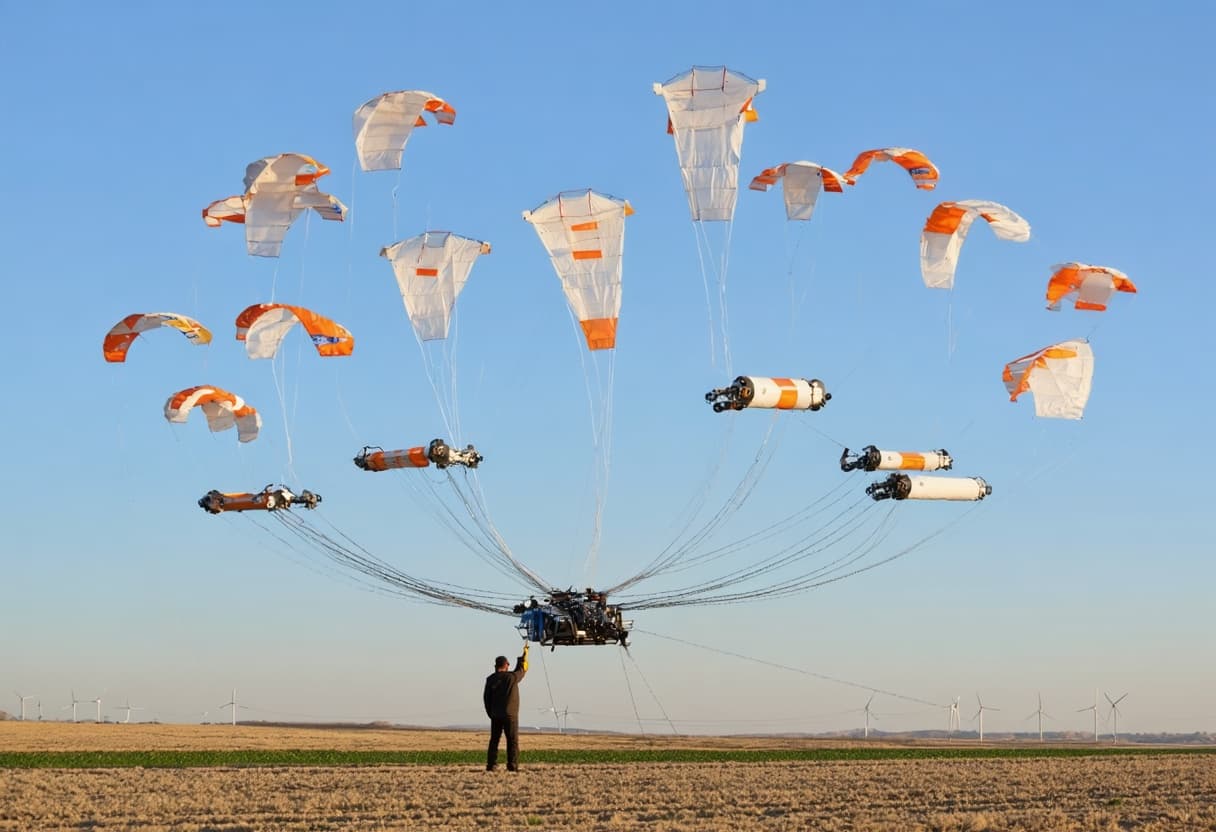
I was hoping to see a lot more robots
Yep, we’re doomed
So addictive - couldn’t stop…
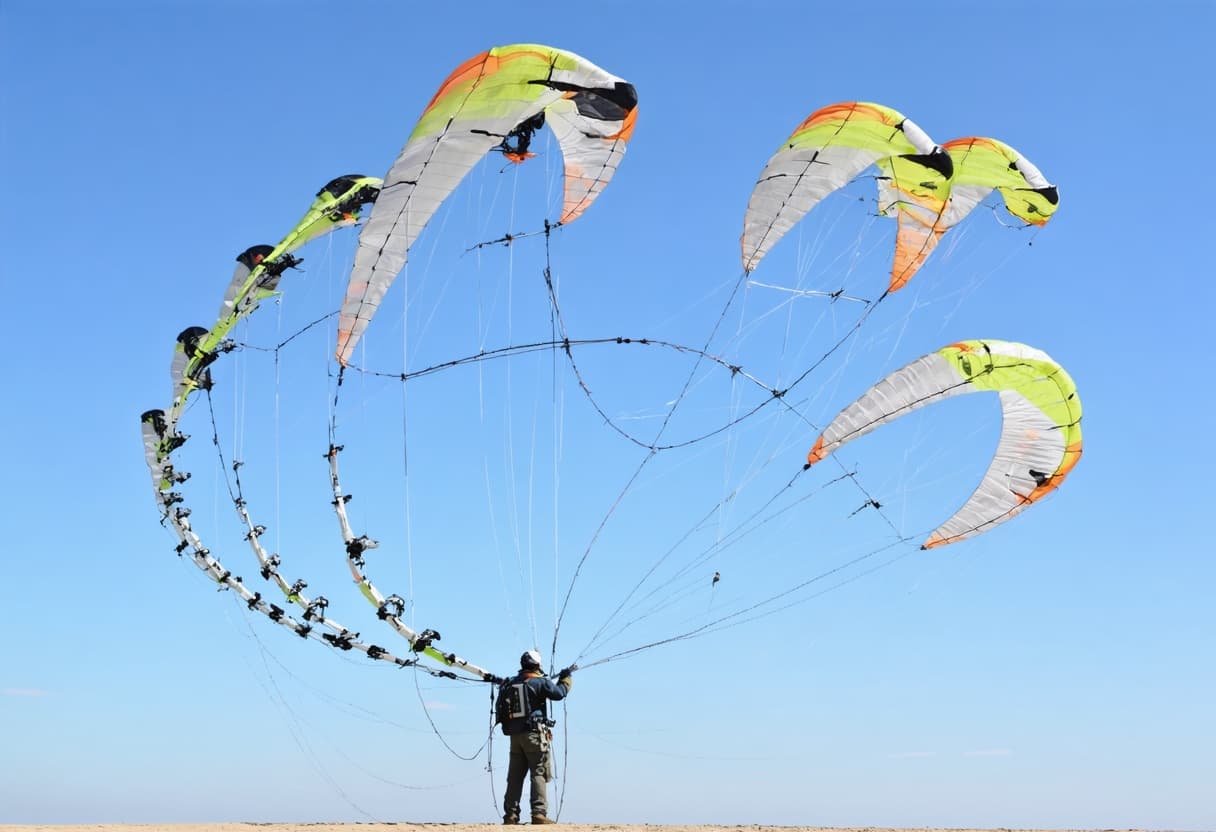
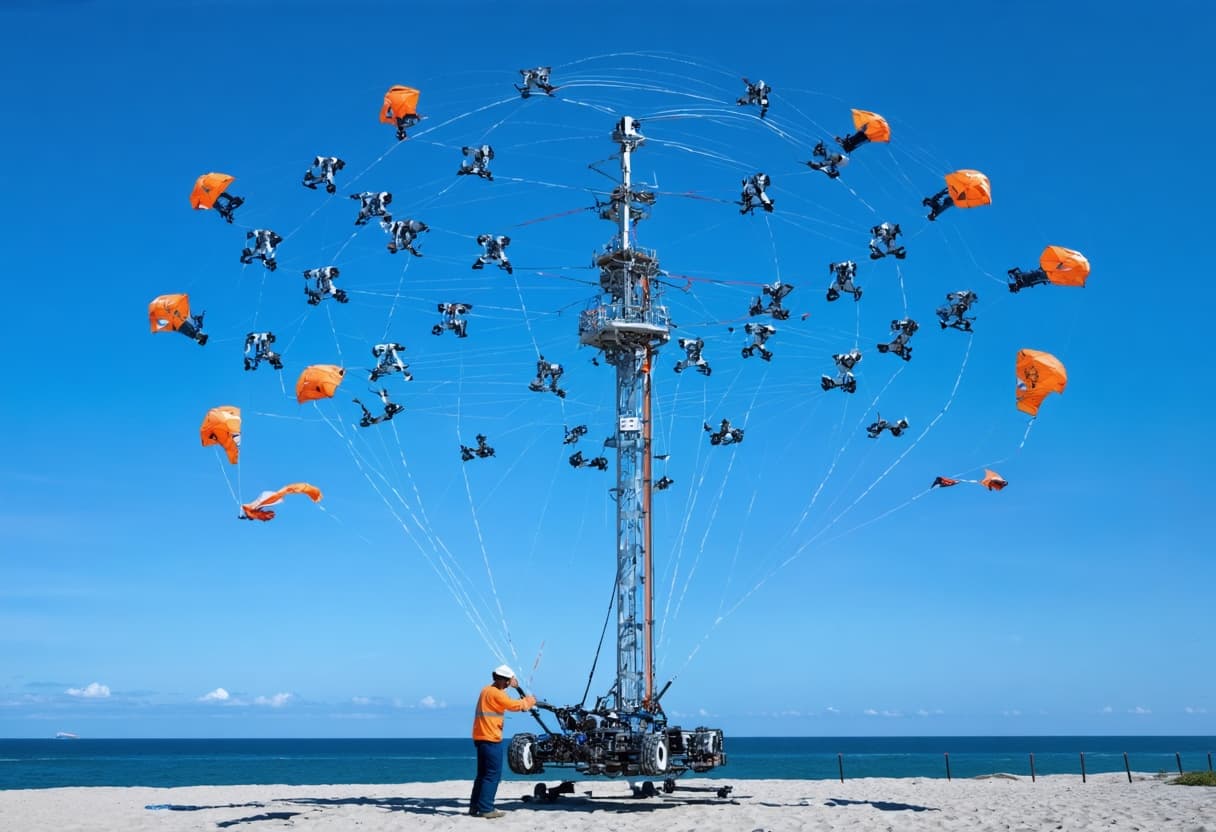
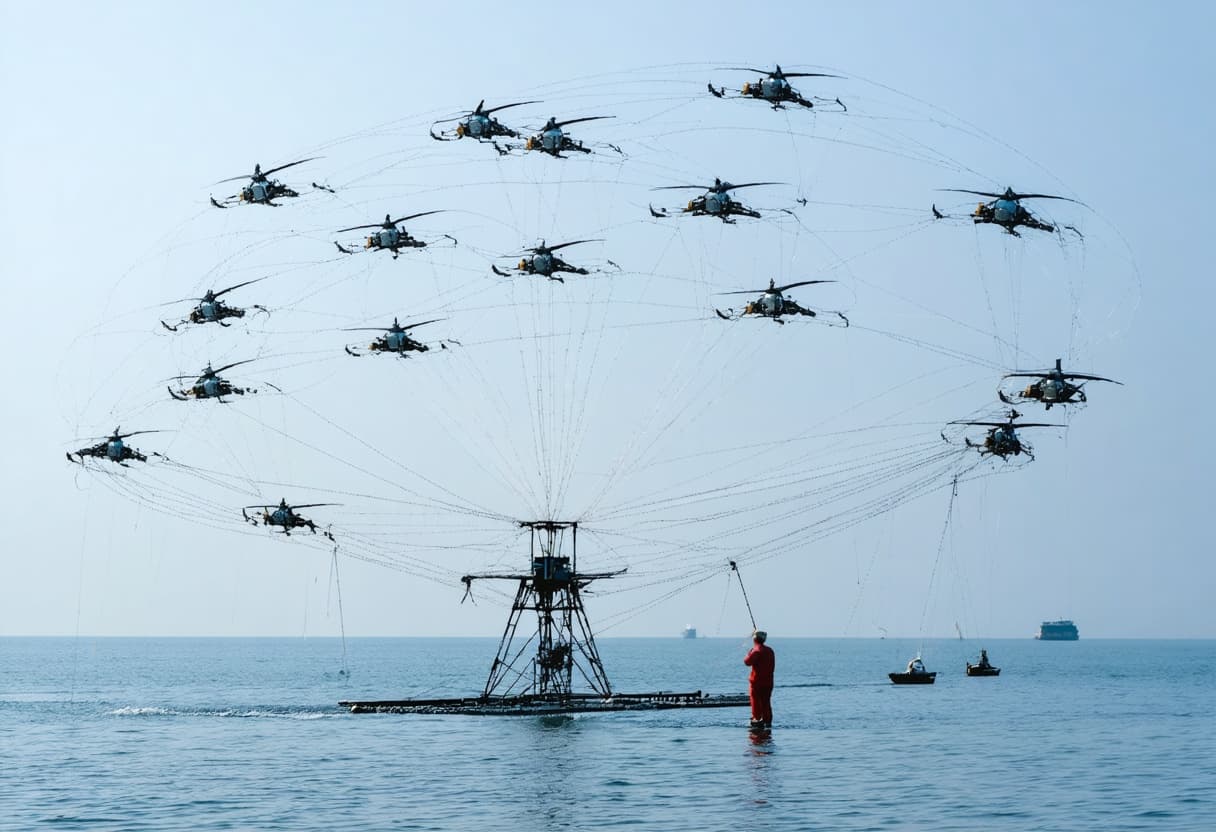
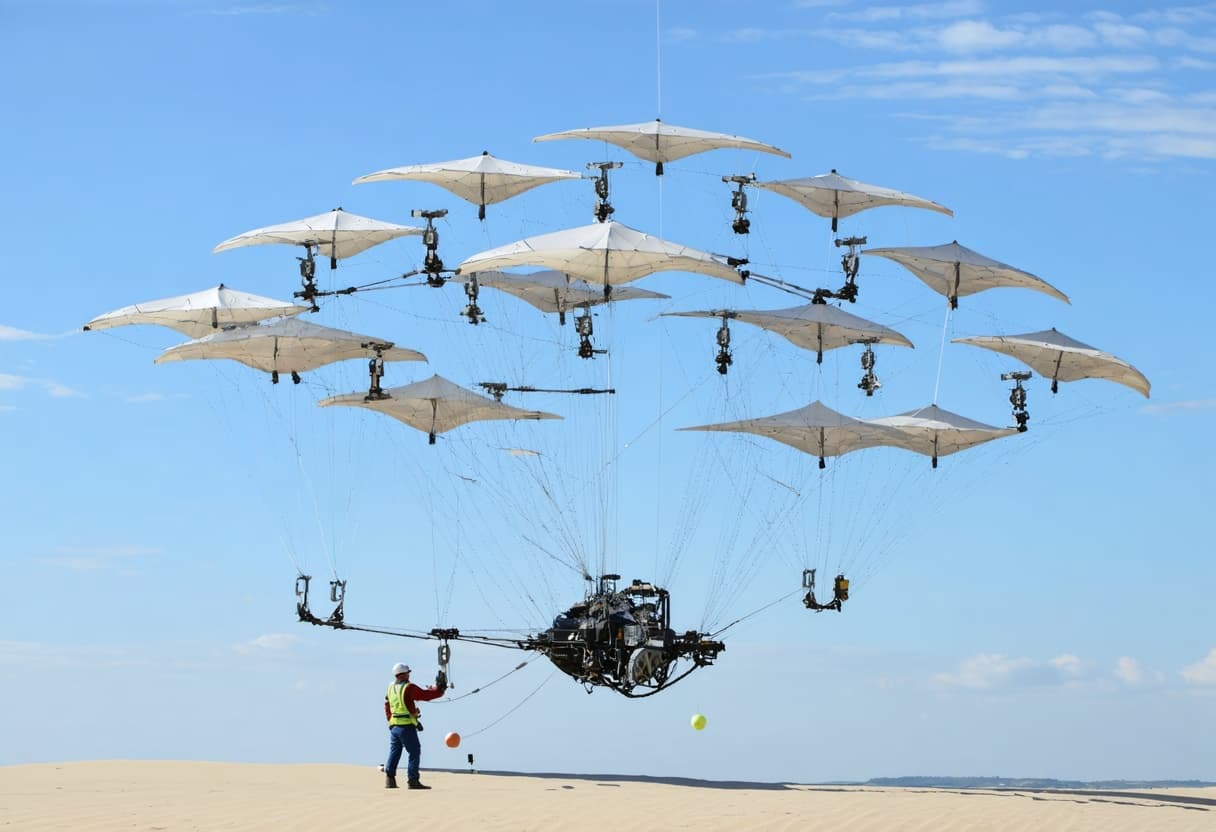
1 Like
Here’s my 2 questions of this AI output …
With the pictures
Q1: Is this our “Will Smith Eating Spaghetti” moment?
(A classic photo and video model prompt which originally spouted grotesque but eerily recognisable output in bizarre configurations)
A1: I don’t think this is a fair comparison as there is so little input of kite network to generate from. But with 3d models - this will come
With the text
Q2: Given that AI diffusion models are good at building coherent structures from noise,
Can we consider the output above as a noisy description of the performance needs of an AWES network for an upland hill farmer ? And from that distillation of needs expand it into feasibility studies and maybe upscale that into engineering documentation for a project which has a relevant use case pre described?
A2:?
For developing a business case it’s interesting that a specific device can be targeted to a very specific niche market persona like this
And also that a class of devices can potentially have tailored engineering proposals for specific individual circumstances and geography
so Q3 how would the refugee camp / island nation / traveller / canyon dweller … versions be evolved differently from a base of potential development concepts?