About LTA 20-1, an old project from Magnus Aerospace Corporation of Ottawa,
Ontario, Canada, a spherical Magnus effect-based balloon, inventor Frederick D. Ferguson, also founder of Magenn Power and inventor of the well known AWE Magnus balloon which is discussed in the present topic:
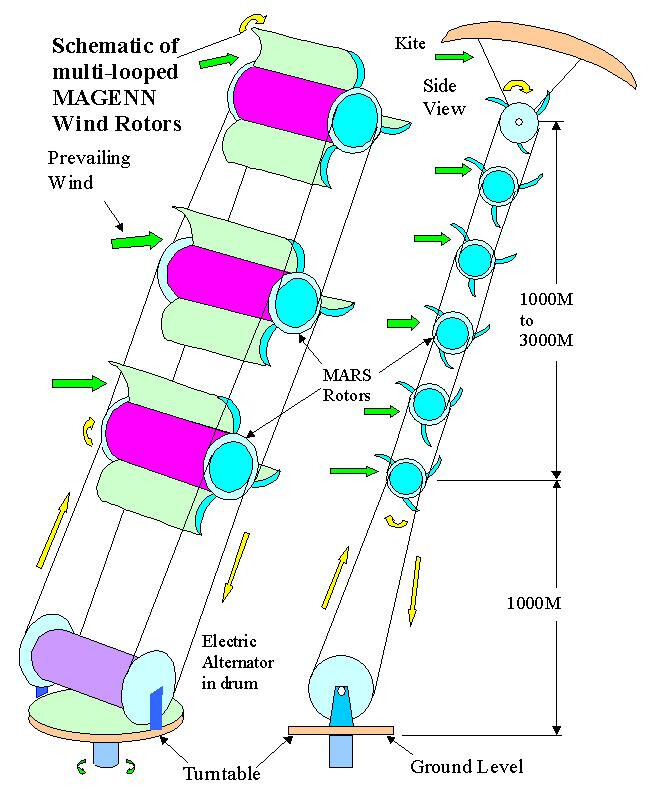
I put again the picture with rope drive transmission for stacked Magenn wind rotors.
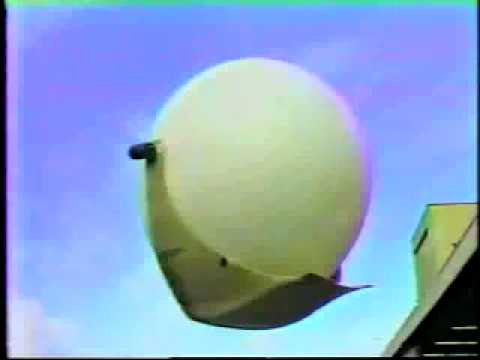
Now an old article provided photos of a Savonius AWE kite? shaped Magenn rotor:
An excerpt:
In testing, Magenn has achieved a coefficient of power that is better than 0.22, which is basically the efficiency of catching wind energy and converting it to rotational power output. “The advantage of the large floating cylinder is the economic efficiency of building such a large unit to catch a massive amount of wind as compared to existing wind turbines,” says Ferguson.
This design looks to be more efficient because the blades are relatively larger and well-shaped. That said the generator is aloft, just like other Magenn embodiments.
This design is also represented in pages 25, 26, 27, specifications page 28, of the following publication which resumes the tested Magenn rotors:
Excerpts page 25 and 26:
100 kW MARS prototype (2009)
In comparison to the Alpha prototype, the 100 kW MARS was a
significantly different design, referred to as the “clamshell” blade
design. The moveable “clamshell” style blades were operated with
compression cylinders, allowing them to pivot open and then retract
during each rotation cycle. This novel design is not described in any
of Magenn’s patents.
In testing, Magenn noted that the 100 kW MARS “…achieved a
coefficient of power that is better than 0.22, which is basically the
efficiency of catching wind energy and converting it to rotational
power output. ….The advantage of the large floating cylinder is the
economic efficiency of building such a large unit to catch a massive
amount of wind as compared to existing (terrestrial) wind turbines."
I wonder if a rope drive transmission, for example by using the lateral tori (the inflatable torus on the two sides), in a similar way as on the picture above (but for a single unit to start), would be possible.