Previous topics here:
For the network fans, this looks nice: Fred Again.. , Jamie T - Lights Burn Dimmer (USB002 Apple Music Live, Dublin 1st Nov 2025)
 nice link thanks
Fred Again has good connections with Lewis and Harris (where I live)
Here’s another… But maybe more depressing
Is this why we build tethered drones?
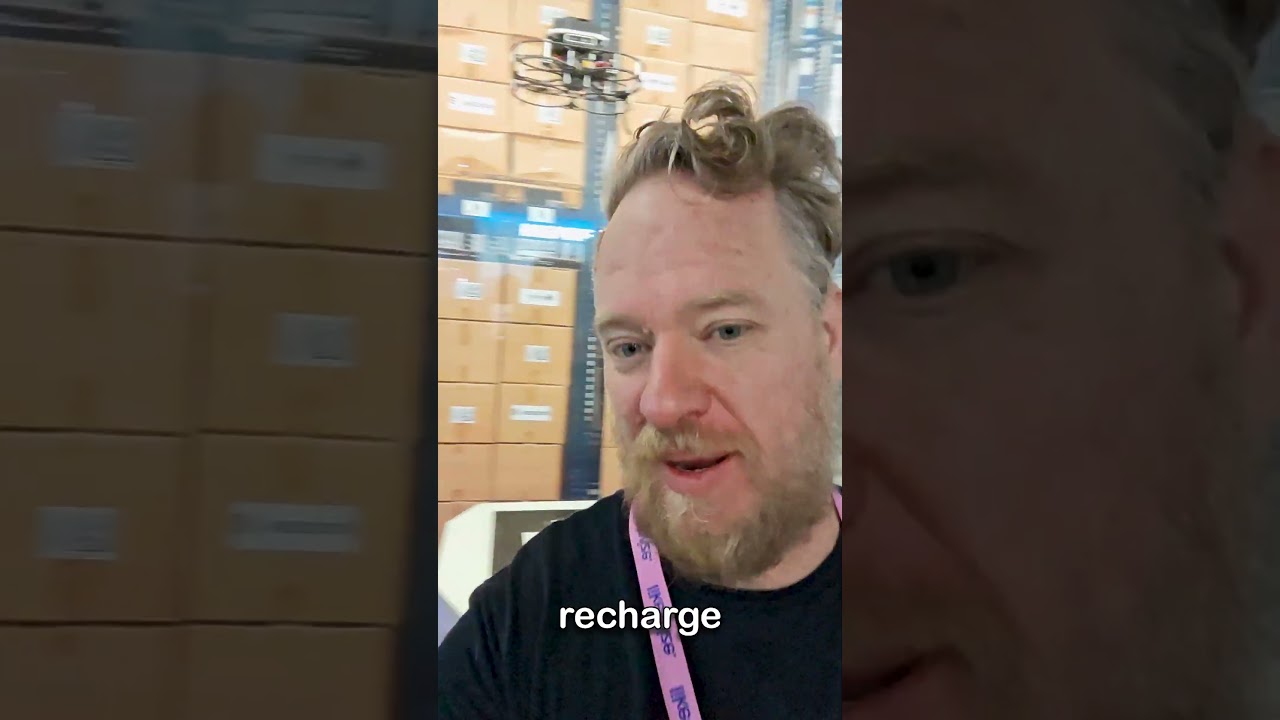
Or will someone drive it to the roof of the warehouse at night and turn it into an AWES?
Thanks Rod. Very interesting.
The introduction begins like this:
Airborne wind energy systems (AWES) are an emerging technology for electricity generation using tethered flying devices. Compared to traditional wind turbines, AWES are easy to transport and use less material over their lifetime. This means AWES can provide clean energy in areas where construction of wind turbines is not feasible. Research into AWES has grown significantly in the past two decades, with research groups and startups proposing increasingly innovative designs.
I’m just wondering if the optimistic statements, of the type which we sort of take for granted, in this introduction are accurate. Is AWE in general, and kite-reeling more specifically. an “emerging” technology, or might it actually be more like fading away? Seems like ten years ago there were so many kite-reeling companies, with all the press-releases, “H.R. Departments”, and group-selfies, but now most of them seem to have gone silent at best, and maybe just disappeared(?)
Next, we’re used to hearing optimistic statements like “AWES can provide clean energy in areas where construction of wind turbines is not feasible.” but is this an accurate statement today, or more of a “hope” or a “wish”? As in “We HOPE someday AWES can provide clean energy”… Is AWES as envisioned in this paper actually even able to reliably provide clean energy at all today? Or is it still “on the shelf”, relegated to the occasional brief demo flight? If so, besides the occasional demo, where is any significant amount of energy of any kind, clean or dirty, being generated by AWES today?
And then, regarding the last sentence, above, maybe it is technically accurate to say that research into AWES “has grown significantly in the past two decades”, since there was pretty much zero research into AWES two decades ago, so any current activity whatsoever would make this statement true, but let’s just look at the last decade: Is there more, or less, research into AWES today than ten years ago?
I would also ask the question of whether the questions posed about circle radius, reel-out speed, etc., might not be coming a bit late? With all the years of kite-reeling research, by so many companies, would we not expect such basic questions would have been addressed, and maybe answered, by now?
Not to seem negative, because I remain positive about AWE as a concept, but if such basic operating parameters have not been solved by now, what have the thousand or so people involved in kite-reeling been doing for all these years? Is there a single AWES in regular operation after all these years? And if the technology still has not developed to the point of having a system in regular operation by now, could concern over such details at this point be like the proverbial “rearranging the deck chairs on the Titanic”, or worrying about the paint color of a “revolutionary” new type of car that is for some reason not actually ready for daily driving? 
Hi Doug, as you are asking about any kind of energy, I would reply that kitesurfers are using airborne wind energy. A few boats pulled by kites are also still in operation like the Seakite (test vessel), Deo Juvante (leisure vessel) or more recently Cap Kersaint (fishing vessel).
Best regards
Hi Battlebot:
Yes I remember almost 2 decades ago, when we had the first High Altitude Wind Power (HAWP) Conference here in California, when the theme was “replacing hardware with software” and using kites to extract energy “from the jetstream”, and putting it on the grid as electricity, replacing those dreaded “Windtowers” (which was daveS’ attempt to redefine “Wind Turbine”). The term “AWE” was quickly thereafter substituted for “HAWP” as sounder minds began to run the numbers on tether weight and sag to reach the jetstream.
After that, without even a reliably self-launching kite, the desperation of word substitution had clearly entered the picture. For example, Joe Faust was promoting the idea of kites providing shade from the sun as Airborne Wind “ENERGY”, since it might reduce the need for air-conditioning. When I expressed my impression that this was a ridiculous case of “mission creep”, Joe replied that he had, in fact, “taken a nap under a kite” in his backyard. When pressed for details, Joe recounted finding a sheet of graphics from a sign on the side of the road, hanging it as a tarp in his backyard, then falling asleep under it. He said that piece of trash “was really” a kite, because there was some air movement, and it wiggled. Ok so we’re back to the “look, it wiggles!” symptom of “The Professor Crackpot Syndrome” in wind energy, combined with the urge to avoid ever using a generator. Mmmm Hmmm…
Anyway, what I learned from all the years of JoeF And daveS making what were, to me, absurd statements, presented in all seriousness, was the technique of REDEFING WORDS to make previous false statements seem true. Once I realized this technique of merely redefining words to seemingly “win” pretty much any “debate”, I recognized it in politics - this was exactly how politicians endlessly lie to us, while we struggle to “prove: what we can all feel - they use language and words as weapons.by pretending to “redefine” the very meanings of the words they use.
So anyway “HAWP” was originally promoted mostly by kitesurfers, saying that if kites could work so well for pulling watercraft, they could also solve our need for generating electricity from the jetstream! Once it was realized that reachnig the Jetstream was going to be too difficult, the term “HAWP” was watered down to “AWE”. In other words, “High Altutude” was changed to just “Airborne”, and the race was on to show the word how “kites” were going to outperform all other methods of generating electricity for the grid.
Well, as time went on, and all the group-selfies, “renting office space”, and “H.R. Departments” turned out to be just a whole lot of silliness, we’re still at square-1: How can we redefine words to make our previous watered-down claims of merely “airborne” wind energy from kites, that too slowly fell apart when after so many years, nobody even had a reliably self-launching kite, let alon a true electricty solution, it was realized that the precursor to it all, kite-surfing, could be neatly “redefined” as being “AWE” all by itself, dispensing with the need for generators, inverters, cabling, and all that complicated engineering, and that just going back to the original motivating factor, that lites could pull watercraft, “was really” “AWE”. The only problem is, it ignores the original meaning of “AWE” and just points back to kite-surfing. SSo if you want to call kite-surfing, at whatever scale, as “AWE”, it is just more of what Joe Faust and daveS beat to death: redefining words rather than advancing technology as originally stated.
And so it goes in the feld of “Crackpot” wannabe wind energy, definitely NOT restricted to airborne comcepts, but long-established before the “AWE” era: Rather than proving, physically, how good a wind energy concept is, by showing how much electricity one can generate in a reliable manner, the new skill set was “debate” and trying to redefine words if necessary, to “win” such “debates”. only thing is, going back for thousand of years of wind turbines, mrely presenting a “debate” or “argument” about how effective a given wind energy concept is, does NOT actually substitute for making it work. So, “watering down" the terminology that originally meant using what had been learned from kites pulling watercraft, to produce grid power, to just refer back to using kites to pull watercraft, is actually a dishoinest approach to fulfilling the original goal, by siamply redefining terms once again to merely refer to kites pulling watercraft, just conveniently dispensing with the need to ever learn how to do what is known as “wind energy” these days, referring to a means of providing electricty, usually to the grid. The lesson here is that redefining words is not tchnological progress, but really, just desperation in the face of abject failure.
Upon further thought, I’ll go a step further to flesh out my point. 20 years ago or so, as windsurfing was being largely superseded by kite-surfing, and the term “wind energy” was well-understood to refer to the growing industry of producing utility-scale electricity from the wind, the modifier “airborne” was attached to the term “wind energy” to denote the growing goal of using kites as the next step in producing electricity from the wind, with the goal of eliminating the dreaded towers, by using kites to elevate wind energy systems instead of using towers.
So “the race” was on! The race was defined by the new term “Airborne Wind Energy”
The starting line was kite surfing.
The finish line was somehow powering the electric grid with airborne wind energy systems.
To now call kites pulling watercraft “AWE” is just substituting the starting line for the finish line.
It’s one more case of “moving the goalpost.”
Changing word definitions to make a previous false statement seem true.
Hi Doug, thanks for this funny nickname and sorry for my disapointing answer, but you asked for “any kind” of energy, then mechanical energy might give you back kitesurfing (but I agree we could also have a rotation, or oscillation, not only translation). I hesitated about giving this answer as I remembered very well the same kind of answer by Dave and you polluting the old forum probably more than 10 years from now. I have to admit you are quite consistent in your answers.
Well, thanks for appreciating the humor At some point in wannabe wind energy, humor is all that survives. Pierre recently pointed me to a discussion on Linkedin where a drag-based vertical-axis turbine dealer made some typical promotional statements which were responded to by Mike Bergey, who happens to be a friend of mine and who once offered me a job. Mike produces the leading brand of small wind turbines for actually powering homes and farms, and this place where I’m at is powered by a 20-year-old Bergey 10 kW turbine, with another on the ground in case it has a problem. Mike replied to this V-A promoter with one word: “Nope.” That’s all that needed to be said, but what a storm of “debate” it turned into. The crackpots can’t ever make any useful amounts of power, if any at all, so instead they try to turn everything into a “debate”. Like other wind crackpots such as the one you referred to that spent a decade or more arguing with every simple fact I offered on the previous AWE forum, this V-A promoter had great writing skills, but no wind skills or math skills, and unfortunately he was arguing with “real wind people” and Mike was just one of them. Anyway, the crackpots all spew the same sort of nonsense, which we “real wind people” have heard a million times, but like the previously-mentioned crackpot, he wouldn’t quit. His main point was the same as that one guy with the merry-go-round featuring folding aluminum buckets, in the parking lot of an industrial building - typical of drag-based vertical-axis promotions where at a glance, you can see that the last thing they want is to expose their oversized toys to any real wind flow. Anyway, both V-A promoters emphasized visually spinning at extremely low windspeeds as their main advantage, with both citing no need to explain why their machine is not spinning when there is almost no wind, with the aluminum bucket guy specifying that you don’t need to explain to your mother why it isn’t spinning, while they guy on Linked-in said the same thing without mentioning his mother. Neither acknowledged the real reason for a wind turbine - making power. One real wind guy pointed out that there was less than 1 Watt available in the swept area of this drag-based vertical-axis promoter’s offering, at the low wind speed he was bragging about his machine spinning in. This is how stupid these people literally are: They try to make a case for the mere visual ability to see their machine turning, even when there is no power available at that low windspeed. These people don’t care about such minor details. All they want to do is make sales of useless devices that will cost far more to remove from the roofs they are leakily mounted to, than the value of all the power they might contribute over their working lifetime. So I told this guy he is trying to use verbal skills to squirm his way out of a math problem. They can’t even understand the mere CONCEPT of making useful amounts of power. Like the guy you mentioned from the old forum, who is STILL claiming he is (in the future of course) going to revolutionize wind energy and generate “TeraWatts”, who has never generated even a single Watt in all his years of big talk and no action. I’ve explained how, because wind is invisible, people can imagine it doing whatever they want, but wind behaves as it does, not how we wish it would. And how because of wind being invisible, it is a magnet for crackpots while AWE is a Neodymium SUPER-magnet. Anyway, I know many AWE wind-wannabes bristled at how I could dare to dismiss 20 or 30 people at a time posing for “Look Mom!” “group-selfies” being used as cannon-fodder in promotional websites promising to revolutionize wind energy, but if you’ve simply paid attention while seeing the same sort of claims made over and over, you understand what you are seeing, which is a bunch of know-nothings who will accomplish nothing. Meanwhile, companies like Bergey survive only on heavy government subsidies and tax advantages, with very high prices and a skeleton crew commensurate with the small size of the actual market for small-wind, even WITH the subsidies. See, while most any house can put up solar, probably far less than 1% of homes have suitable space and wind for a turbine to make sense, or even be allowed. Nobody is going to put up a 100-foot tower in a residential neighborhood, for example, and nobody is going to run a kite-reeling system from a neighborhood home either. That’s where vertical-axis turbines come in: Since they produce very little energy, and are usually only pursued by complete idiots, they are seldom mounted on towers anyway, but instead placed on the ground or a roof. That means you can place these far less efficient models in places with no suitable wind resource, which is then stated as an advantage, whereas in reality they are targeting these bad sites which are simply not suitable for wind energy of any kind! But they can’t admit that and still make sales, so what they have left is just lies, which they are really good at. So with the AWE crowd, they always talk about software replacing hardware, lower material use, higher wind speeds at high altitudes, yet “real wind people” can see at a glance that these are just people who don’t know about all the problems they will have. It’s also telling that none of them has ever even had a kite that is reliably automatic in flight, let alone able to launch and land automatically. How “out-of-it” can they possibly be? So for those of us who have taken the path of learning aout how real wind energy works, we can see the perpetual newbies are not only disadvantaged, but, unknown to them, hopeless, with regard to any success. Unreachable, and unteachable. I’ve also explained that such crackpots and ripoff artists almost always, eventually, “quietly go away”, but there are a few EXTREME crackpots too dedicated to lying about future accomplishments, while actually having none, that they seem to NEVER give up trying to substitute words for reality. And speaking of that, I will note that years ago, seeing that there were no AWE people with ANY actual requisite knowledge, I felt obligated to at least expose them to the facts, so they couldn’t say nobody warned them or tried to clue them in, but it’s kind of a thankless job, and whenever I try to let anyone know what’s going on, it’s a bit hard to keep the story short and still fit in enough background to make simple points to people who don’t really know much about , well, anything, let alone wind energy! Oh well, I’ve tried, but some things are just beyond hope as far as trying to let people know about simple facts, when they insist on living in a world of fantasy.
Hi Doug,
I posted about:
Small-scale wind power for everyone: New turbines operate from just 2.7 m/s - NotebookCheck.net News
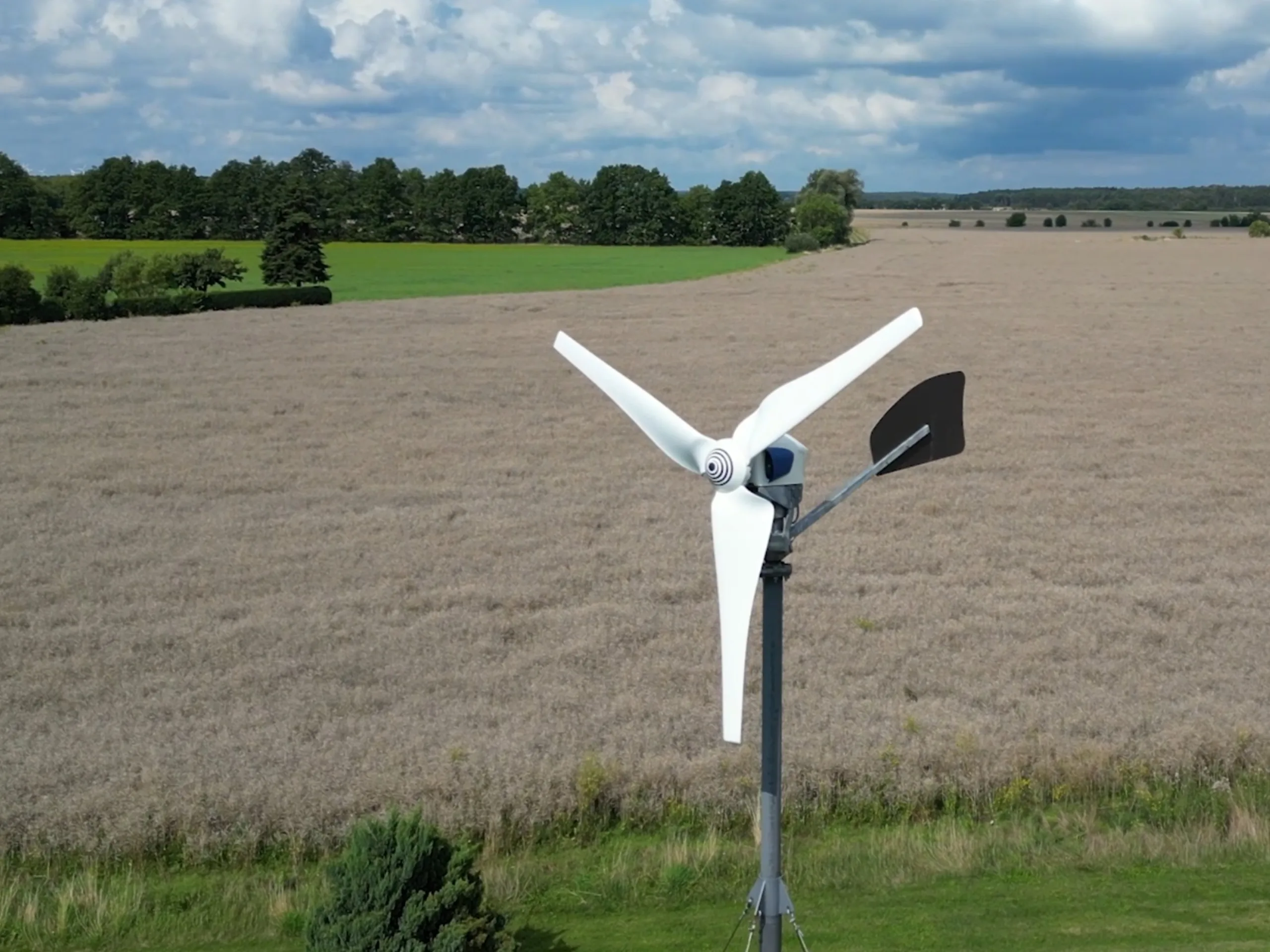
You posted something about a vertical-axis wind turbine (VAWT), while I posted about a horizontal-axis wind turbine (HAWT).
I place the two photos next to each other to help you understand the difference between VAWT and HAWT. 
2 posts were merged into an existing topic: (Teaching kites to fly using) Reinforcement Learning
Newton’s Third Law doesn’t stop there. The complication with helicopters is that the main rotor is driven by an engine that applies a twisting force (torque) to spin it.
If the helicopter’s engine twists the rotor blades clockwise (action), the rotor blades exert an equal and opposite twisting force back on the helicopter’s body counter-clockwise (reaction).
This is called torque reaction, and if it’s left unchecked, the helicopter fuselage will spin in the opposite direction of the main rotor.
I have regularly seen this observation, which should therefore be correct.
With an electric helicopter with two counter-rotating rotors: when I hold one of the two rotors, the fuselage (and the other rotor) will rotate in the opposite direction to that of the rotor held when released. Newton’s 3rd law is therefore indeed verified.
Why windmill blades are twisted. More beginner ABC’s for first-grade students…
Hi Pierre:
Yes, I’ve seen this “press-release breakthrough” turbine before. Not very impressed. Wide blade roots - nice for easy startup in light winds. Perfect for locations where wind energy is not an appropriate choice! There is so little energy in very light winds that it is not worth mentioning, let alone targeting. But the beginners just want to see it spin, even if their site has no usable wind! It’s all about emotion, not numbers. Veterans call such nonsense “a waste of bearing grease”… The generator is likely too wimpy for the rotor size, which is why it spins so easily. A wimpy generator more easily burns out in strong winds. A mere picture means nothing. What matters are the power curve, then its track record of surviving high winds. You need multiple units in multiple high-wind locations to establish reliability. Beginners test turbines in light winds, medium winds and sometimes strong winds but seldom sustained strong winds. Seldom in severe storms. The main thing is whether it is still even operational after maybe a year of facing what Mother Nature has to dish out! All sites get very high winds at some point. The turbine has to survive both physically (not flying apart), and electrically (not overheating) Beginners know nothing of any of this, and can’t comprehend such basic facts. All they “know” is they “must be” smarter than all the experienced wind turbine designers…
The explanation provided in the video can help shed light on the problems posed by large flying rotors, which you may not have even imagined.
You certainly have specifications that I don’t. Would you like to share them?
I just said “likely” based on their typical claims and design drivers, combined with their inexperience. Wind energy beginners all tend to make the same predictable mistakes, and say the same silly things. it gets very redundant after a few years…
A positive comment (it is rare! Maybe it is because it is a lift-based machine) on a vertical-axis wind turbine (VAWT) by Michael Bergey, followed by a response from the designer Andreas Gamborg:
That’s a handsome machine.
Michael Bergey Thank you Michael.
I am happy we are not getting the “Nope”