Hey everyone,
I was reading about how shipping companies are trying to cut fuel costs and reduce emissions. I came across the term wind-assisted propulsion but I don’t really understand how it works in practice.
Does it actually save fuel?
Is it being used by real shipping companies or still experimental?
Any resources or companies you’d recommend checking out?
Curious to hear from anyone with experience in this area.
Your post is strange because you seem to be affiliated with GT Wings, a supplier of wind based ship propulsion, but it seems like you don’t know a lot about it?
Hi, I am working in this field or close.
Yes it saves fuel.
Yes, some systems are used, others still experimental.
Have a look to https://www.wind-ship.org/
See the solutions (Rotor Sails, Wing Sails, Suction Sails (for example AirWing), Soft Sails, Kites) with their respective benefits and challenges.
For example noted benefits of Rotor Sails: “High efficiency, low maintenance, proven in commercial shipping.” I would like to know precise and quantified examples with real measurements.
It looks that quantified examples are available somewhere:
The
considerable savings it produces are not just
talk. They have been verified during extensive
measurement and analysis campaigns by well
known third-party companies. These include
RISE, LR, NAPA and ABB.
Third-party verified fuel
savings and emission
reductions of typically
5–25% – and even more in
good conditions
Does it seem a bit strange to anyone else that none of these sails-to-pull-ships efforts just uses actual sails? You know, the kind made of fabric? By the way, did you know that “Canvas” is an alternate version of the word “cannabis”, because sails were commonly made of hemp fibers? Anyway, you’d think if this went beyond public-relations “greenwashing” through announcing sexy “new” or unexpected technologies, someone might be using actual sails as sails, if sails were so compelling. Seems to me the shipping companies are looking for a way to be able to say “Well, at least we’re trying to do something!” as though a world reliant on shipping is somehow their fault. We’ve already learned that kites were not working out so well, due to pulling ships without keels sideways, requiring rudder forces to maintain directional aim of the ship, which increases drag. I have a feeling this is all a fad that will wash over in due time. Sails were already obsolete when coal-powered steamships emerged over 100 years ago. These alternative sailing devices have questionable benefits, while adding weight, complexity, cost, drag, deck clutter, danger, and increased maintenance and operational duties for the crew.
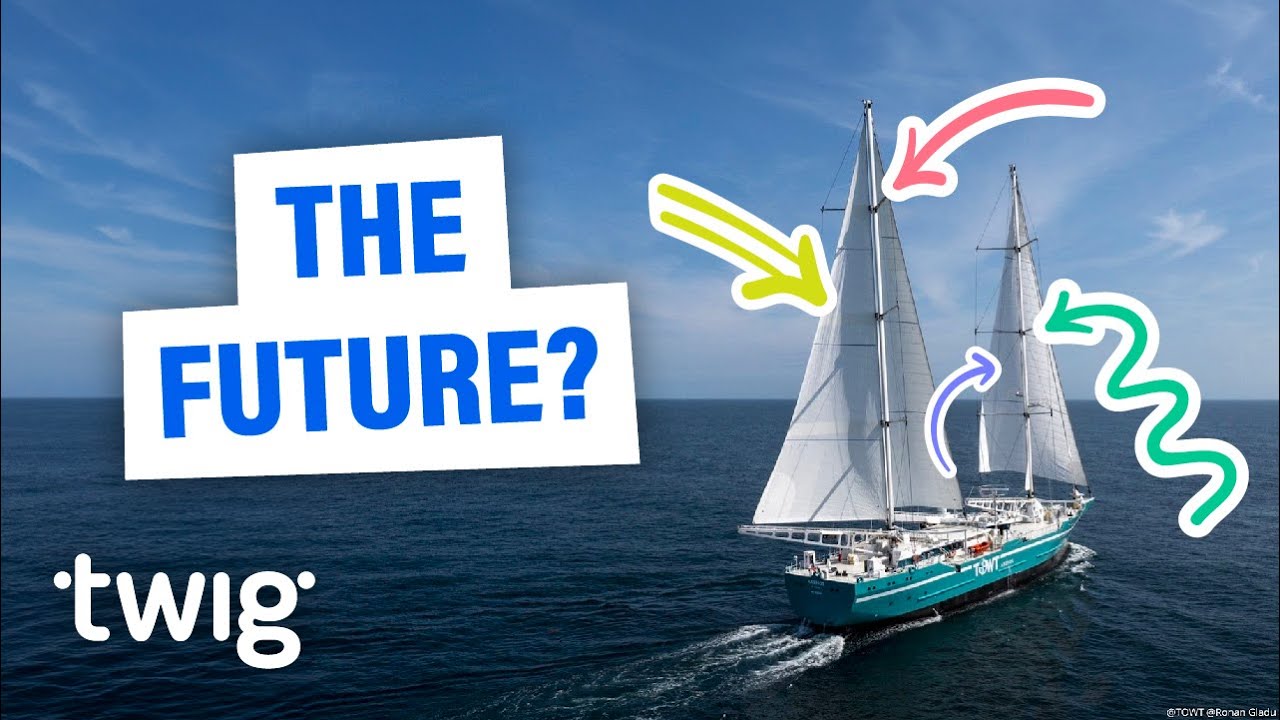
TOWT (shared by Pierre) is a good example of soft sails.
Neoline sails are not totally soft, but close to old fashioned sails https://www.youtube.com/watch?v=8AaMK1BXF88
These boats are newbuild, with sized daggerboards and rudder to be able to sail.
Hi Pierre: Yes, I thought if anyone would bring up the single sailing container ship in the world, it would be you who would know about it. Only thing is, its nowhere near big enough for serious cargo operations, and more of a “feel-good” demo for accessing small ports, built to “make a point” more than a serious business case, with slow travel times. It can take a few containers to ports a big ship could not fit, and would not bother with. Seems like it could use one more set of sails! That might make it hard to load and unload cargo though…
P.S. I’ll bet it’s got plenty of diesel power “just in case” the wind isn’t blowing.