Indeed, all sorts of wind turbines make electricity (or some other sort of conversion) when there is wind, lots when the wind is strong, a little when it is weak, and none at all when there is no wind. We have always known that.
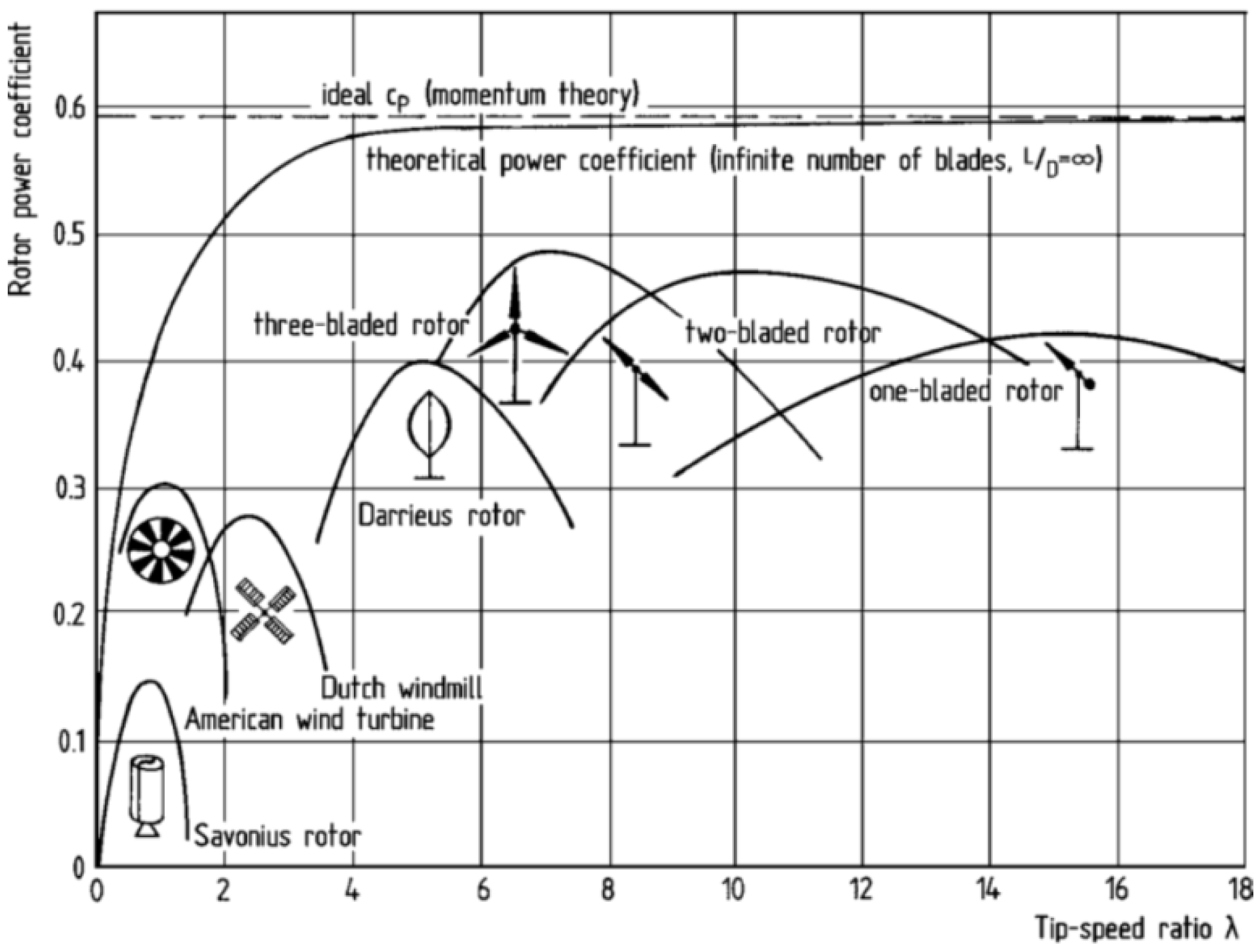
The Savonius-type wind turbine you’re suggesting is one of the least efficient ones since it relies on blade drag instead of lift, with a power coefficient Cp of 0.1 or, at best, 0.15 (from what I remember), while a regular wind turbine would have a Cp of 0.45 and uses less material.
That’s why regular wind turbines crush the market all over the world, including in China.
Yeah, not only that, but because a Savonius uses the most material per Watt, it is less suitable for airborne use.
Furthermore, the thesis of this proposed, on-paper version of a Savonius purports to make the output voltage steady by limiting output to that of the lowest wind speeds, throwing away almost all the power at higher wind speeds. Kind of like taxing the rich to make everyone “equal”, with the result that everyone is equally poor.
Besides that, there is no requirement or great advantage to keeping output voltage steady - who came up with this? Inverters deliberately accept a wide range of voltage.
And besides that, nobody here is about to buy a patent. The people here have almost no money to work with, and are focused on their own not-so-great ideas, with little interest in trying to “rescue” the least efficient type of turbine that almost nobody even uses because it is so bad.
Because there are no particular requitements for someone to post in this venue, we see a lot of crazy ideas, or ideas that just make no sense whatsoever, on a regular basis. in fact the whole field of airborne wind energy is characterized by a lack of basic wind energy knowledge and nothing in regular operation, so there is really nothing here, in most cases. But we do get a lot of crazy stuff here from random newbies.
My explanation has always been as follows:
There are a million ways to make SOME power from the wind at SOME cost.
Because wind is invisible, people can imagine it doing whatever they want, but the wind does what it does.
Further, because wind is invisible, wind energy is a magnet for crackpots, and airborne wind energy is a neodymium supermagnet.
So, basically, people here have an extremely high tolerance for outright nonsense, and usually, very little discernment as to what is, and is not, nonsense, but in this case I think most people here see this for what it is.
I once had a gentleman with a patent for a medical device, approach me for investment. All I needed to see was a list of the relevant prior art, and how his patent was an improvement, or offered advantages, over what was already known in the art. It would have been a simple matter of providing the relevant information, but he never did. He was just angry that I was not very interested, since he could not provide any relevant information about why, specifically, his patent had any actual value.
In your case, you said your patent is valuable because you have infringers that could be gone after legally for licensing or damages, right? So, the relevant info would be what claims in your patent are being violated by what manufacturers or marketers, for what products? Pretty simple. Pretty basic. But you have not provided any such basic, relevant information, so why would you expect anyone to be interested? My suspicion is such supposed infringers, if any exist, might be selling worthless plastic Savonius turbines on Ebay, for purchase by other innocent newbies, who will never understand why the product they bought never produced any useful amount of electricity.
Meanwhile, most of what i’m seeing seems to be just the typical symptoms of common beginner ideas from wind newbies - ideas that seem to make a lot of sense, but that feeling is based on a lack of knowledge that comes across as typical symptoms that would lead to a diagnosis of what I lovingly call “The Professor Crackpot Syndrome”. It’s as though someone comes in covered with red spots, not knowing the red spots are a symptom of chickenpox, and you try to tell him he has chickenpox, but he will typically just go on showing you his red spots, unable to even comprehend that he is telling you he has chickenpox, or in this case “The Professor Crackpot Syndrome”. The most common symptoms are saying your turbine is better because it can capture lower wind speeds (which contain almost no usable power) and using Savomius turbines. So, congratulations, you have been diagnosed. The part about keeping voltage constant is a new symptom I do not remember seeing.
I have no idea where you came up with this notion of “Professor Delirium Syndrome,” especially since I’ve presented a fully functional prototype along with its corresponding patent number. Surely you don’t think the examiners at China’s Patent Office lack the technical discernment to distinguish between a single-rotor, single-generator configuration and a multi-rotor, single-generator design? Moreover, if you have any experience in investment, you must know that worthless, junk patents hold no value whatsoever—not even as targets for infringement claims. Frankly, it strikes me as absurd—almost comical—that someone bold enough to claim constant-voltage, constant-power generation across the entire wind spectrum, from gentle breezes to typhoons, and who has actually provided a concrete technical solution—a visionary akin to Leonardo da Vinci sketching out a helicopter centuries ahead of his time—should be met with the patronizing remark that such a concept could only work with a Savonius turbine. To me, that criticism sounds like nothing more than a joke.
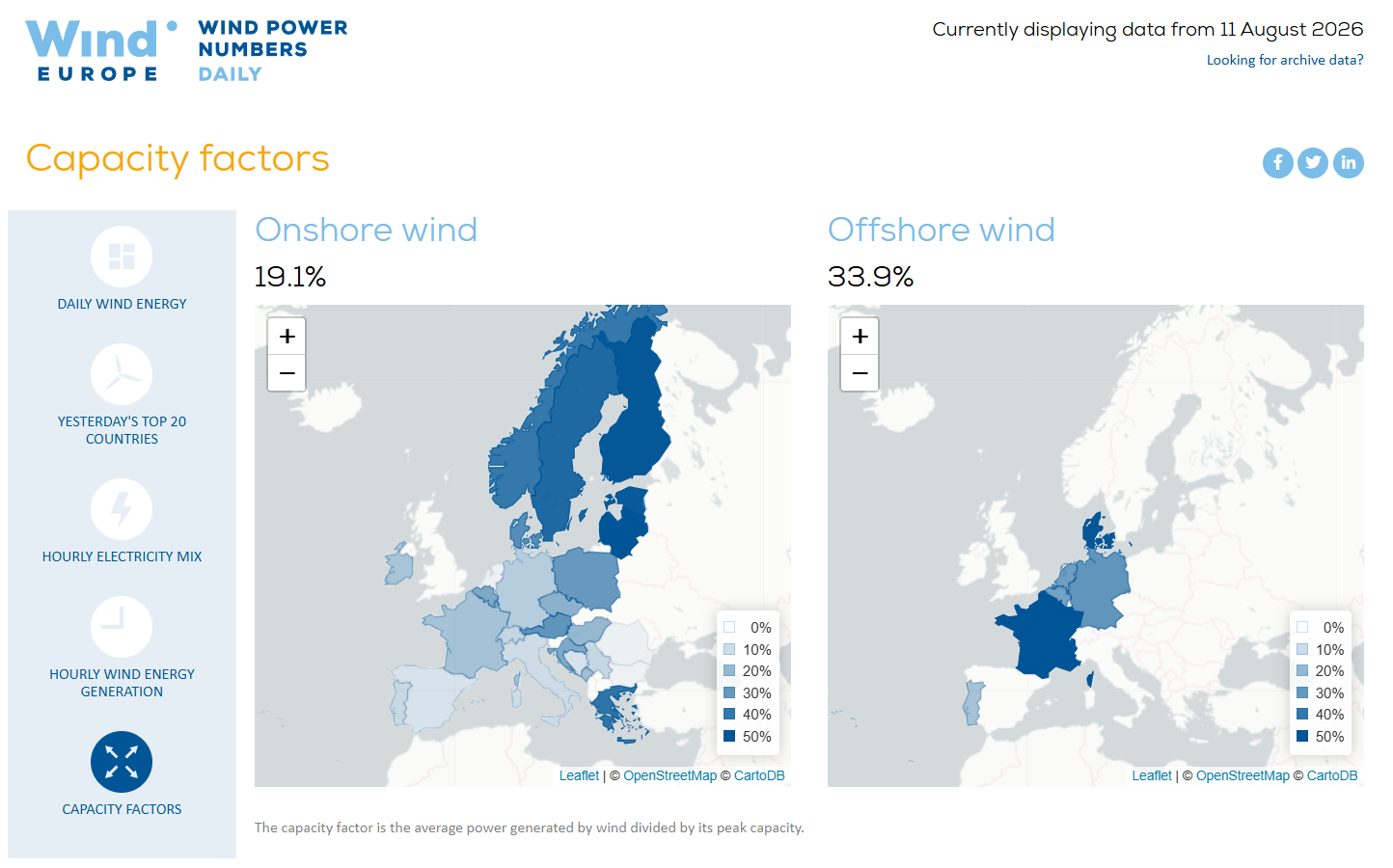
You’ve got both the Savonius rotor and its generation efficiency wrong. According to my research, the actual capacity factor of conventional wind turbines is only about 10%. Moreover, the primary bottleneck limiting their full-power output is rotor size. In other words, whether in Europe, the U.S., Australia, or China, the swept area-to-power ratio of conventional turbines does not exceed 3–8 m²/kW, whereas my patented solution achieves up to 24 m²/kW. A new era of wind power is dawning, and it won’t stop just because you refuse to accept it.
I wrote about the power coefficient Cp of the Savonius wind turbine.
I stand by it as well as the characterization of the Savonius rotor that I indicated.
You use the expression “generation efficiency”, while I used the expression “power coefficient Cp”, which is not the same. Then you move on to the “capacity factor of conventional wind turbine”. Capacity factor and power coefficient are two different things, even if they can be included in “generation efficiency” in the broad sense.
How does requiring a larger swept area constitute an improvement, knowing that more equipment would need to be used?
我现在很讨厌和不尊重知识的人讨论科学和商业问题了。因为这除了浪费我的时间和精力,还会影响我愉快的心情。
I’ve grown increasingly reluctant to discuss scientific and business topics with people who show no respect for knowledge. Such interactions not only waste my time and energy but also spoil my good mood.
I don’t know where you got the 13m/s you say I used, but 13^3/5^3 = 17.576. So in 5m/s wind you would need 18 times as many wind turbines or wind turbine area to produce as much power as in 13m/s wind.
If you don’t give your sources and write out your calculations, we cant check your work. But, yes, obviously when you choose a site that has an average wind speed of 5m/s, you are losing money. Micro wind turbines usually are placed poorly, like we saw in the study with the 3.75% capacity factor.
An AI response below, checked and edited. I haven’t checked and corrected the Actual Industry Reality numbers. I look at that after the AI response. Note that this does not use your “单个风叶” (single blade) metric. That’s not a metric I am familiar with and I don’t understand why you would want to use that.
Again, electricity, yearly (Wh) = CF × 8766 × 0.5 × ρ × A × V³ × Cp × η
For a Savonius wind turbine with a capacity factor of 3.75% typical for micro wind, area of 1 m^2, rated wind speed of 10m/s, power coefficient of 0.16, generator efficiency of 90%:
You can improve on this by choosing a better site that would give you a better capacity factor.
You now want to improve the capacity factor by, essentially, coupling more rotor area to a single generator in low winds, thereby reducing gearing efficiency and probably the power coefficient.
Have you looked at:
How undersizing the generator affects the power coefficient of a wind turbine? By doing that you change the tip speed ratio of the turbine away from the optimum.
How the aspect ratio of the turbine blades affects the power coefficient?
To be honest I think the things you are talking about are pretty basic ideas as far as I can tell. Ideas that are ok but you are not the first to consider them. Your patent is worthless, sorry.
You are in a forum with some great people that are willing to help. For instance, explain how you could make your design airborne and some people here would be able to comment.
looks like a pipe dream, wont work. Claude AI says you are solving something that isnt a problem, I tend to agree. I also see this is severely hard to build at reasonable cost for HAWT (adjusting radius of rotor did I understand?). Also twist of the blade would not be right if the shaft length varied. It could maybe be fixed, but to quote others here on the forum «all you gotta do…»
Claude AI:
One honest caveat about the “junk electricity” argument: what makes wind hard for grids isn’t mainly poor control between cut-in and rated speed — it’s that when the wind stops, there’s no energy to extract at all, and no blade geometry fixes that. Constant output while running is already achieved; constant availability is the actual problem.
The thing I am wondering about is whats up with your attitude. We dont owe you anything still you dont seem friendly