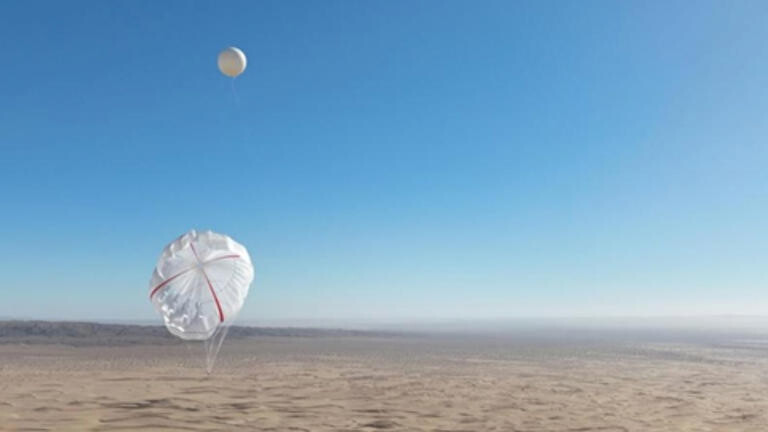
First of all, I agree that it would be more convincing to see a human or other visual basis for size comparison in a photo or video.
My typically skeptical analysis is that the same team that had been pursuing this parachute-reeling idea previously, had become aware of a source for a very large surplus parachute, and a balloon large enough to lift it. Just a guess there.
If you read carefully, they start out just saying they flew a very large kite. Then they add details about a winch, generator, or whatever, in text form rather than showing it, but my impression is, at that point they are projecting their future wish-list into a present “reality” by merely stating it as an already-established fact.
I think that if there actually were a power-producing ground station, where a winch and gear drive were spinning a generator, they would happily and proudly show it.
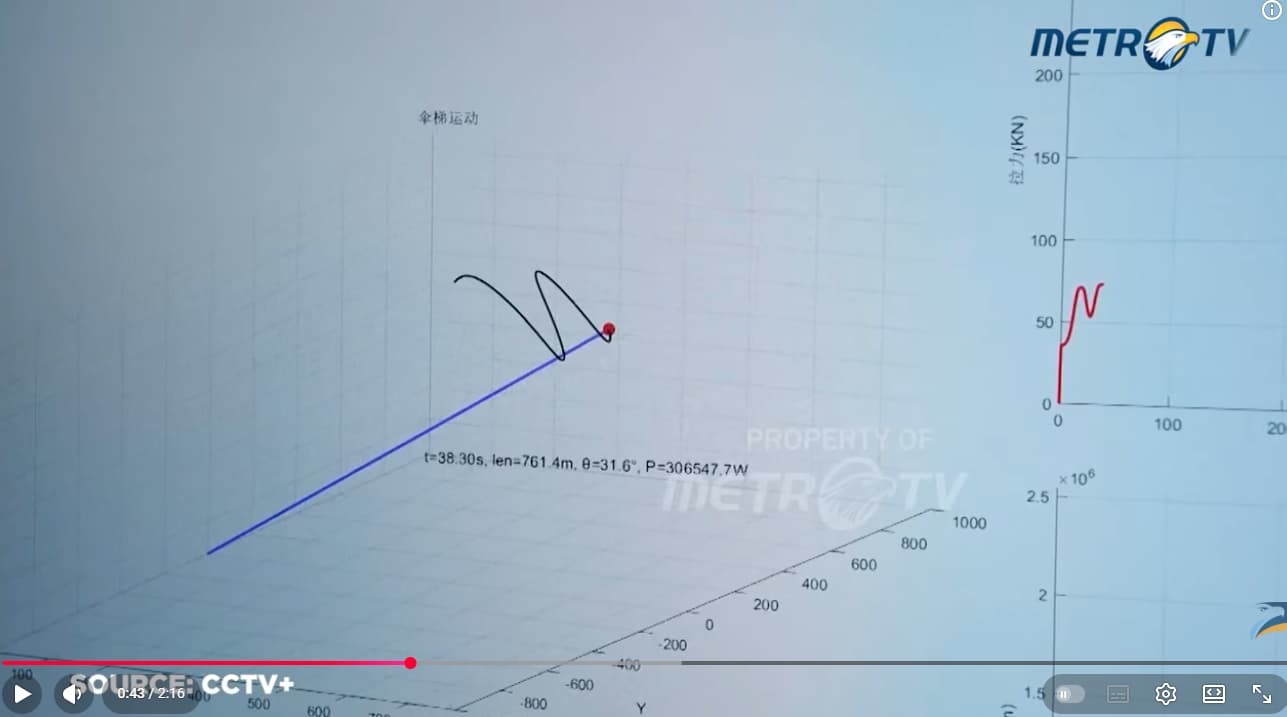
If they were measuring the power output as claimed, they would probably also feel compelled to show a video of the meter, and/or a scatter plot of the data.
As it is, we merely see still photos of a balloon lifting an open parachute, or sometimes a somewhat closed parachute, with text claiming a bunch of mysteriously-visually-absent electricity-generating components. I believe all the further details are one more example of the observation that “In AWE, all accomplishments are “in the future” (and always will be). Now of course that is an exaggeration - there have been a few brief moments of power generation in AWE, and those accomplishments did show data, if we are to believe it, or at least we do know some power has been generated.
But the typical “press-release-breakthrough” claims of a specific energy capture per year are obviously mere hopeful estimates at best, likely just fantasy numbers “pulled from the air”, as they wish the actual power was, but I don’t think any power was actually generated.
And speaking of power generated, let’s recall that if a parachute is moving downwind at half the windspeed, it is only exposed to 1/8th the available power, from what is an airborne version of a Savonius turbine, already the least efficient concept commonly pursued, and which is only pursued because of the fact that “any idiot can understand how it works”…
Let’s just keep in mind what we actually see, versus what appears in mere text as embellishments to the photos.
Was Altaeros ever really “powering a remote village grid in Alaska”, the 49th state? Not as far as anyone has shown, and not according to the locals in that remote village. Which brings up the question of why such claims are so often made about supposed systems in regions so remote that nobody can easily get there to verify anything?
Did Makani ever power eighty or a hundred homes in Hawaii, the 50th state, as promised in their list of “always in the future” “accomplishments”? Definitely not.
Was Skysails manufacturing and selling working AWE systems around the world? Seems like that was one more future-fantasy promoted as present fact.
So we DO have an established pattern of at least reality-bending exaggeration, if not outright deception, right? At this point, I think the pattern of deception is pretty-well established. As such wannabe innovators often say, “Fake it til you make it!”
The unsaid part is, if you don’t “make it” then all you did was “fake it” the whole time…
In this case, I would say, first “consider the source”. Beyond that, believe what you see, not what appears as mere text superimposed on photos a balloon lifting a parachute!