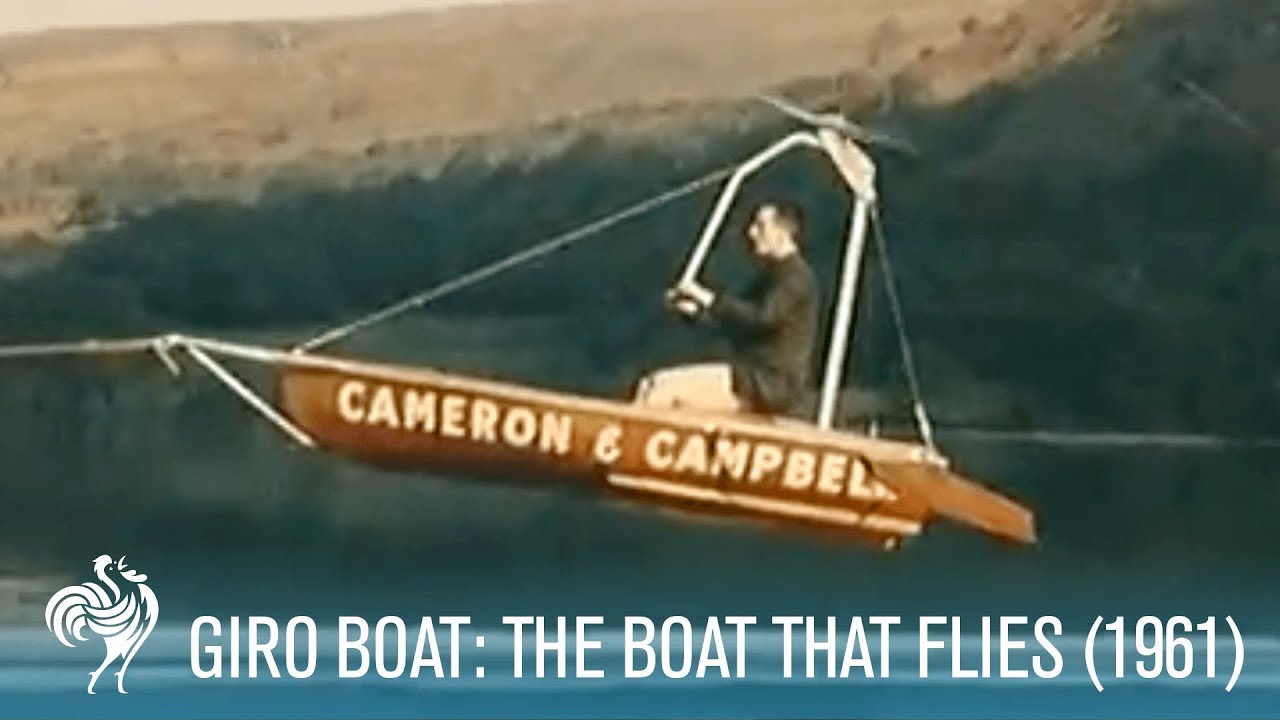
This topic is to collect resources on the physics of tethered autogyros, autogyro rotors, or on the physics of a windmill (not necessarily wind turbine) at an angle of incidence to the wind.
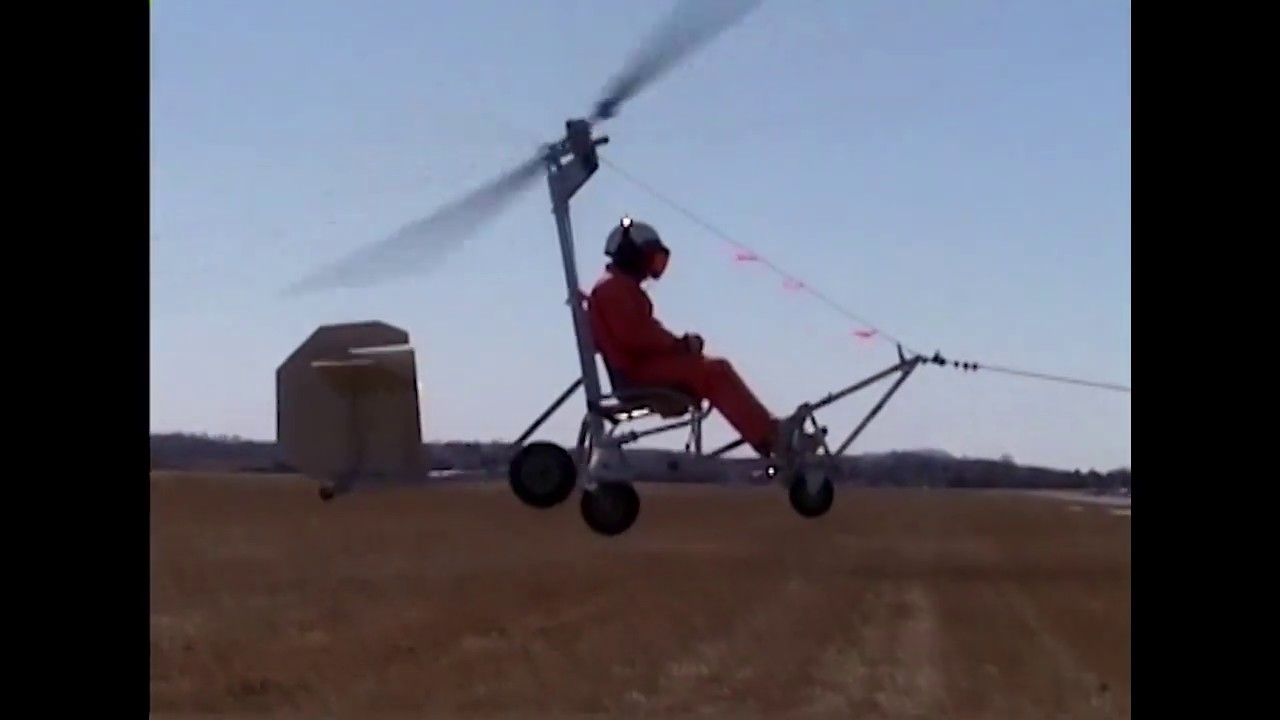
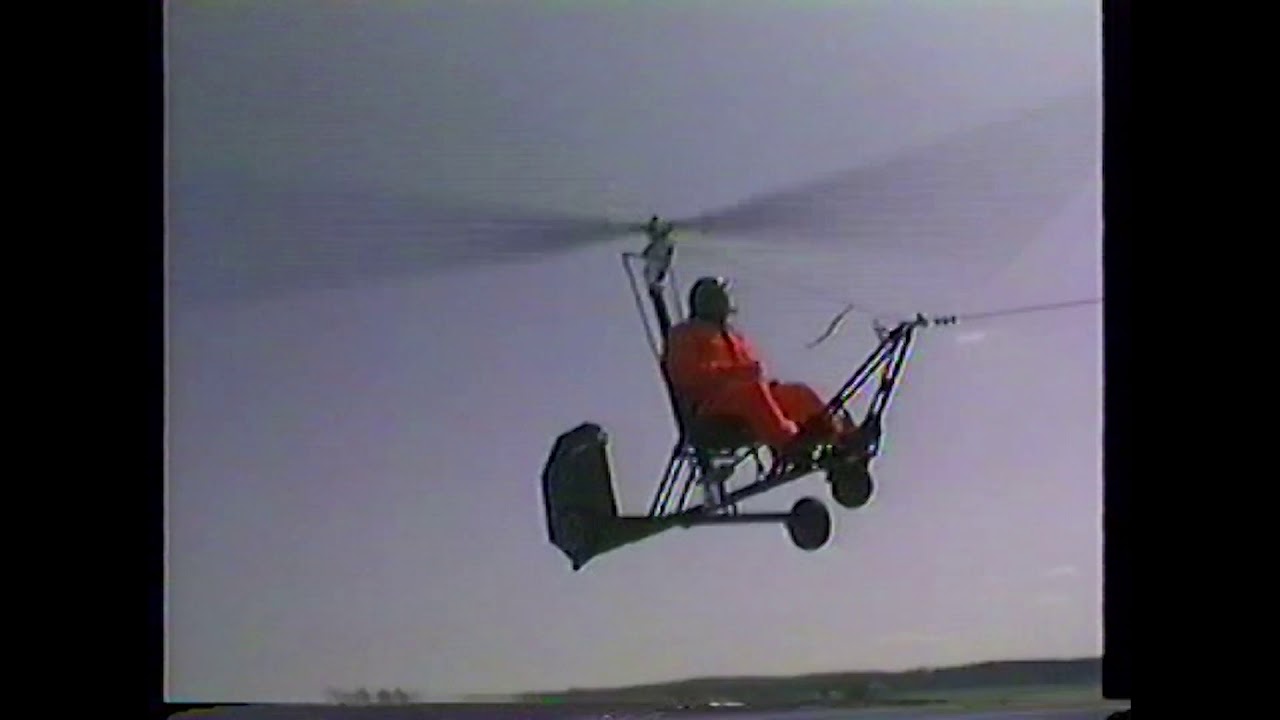
The wind turns the rotor in autorotation. Once it gets to around 320 rpm, it will spin no faster and up you go. It takes about a 22mph wind in my case at my weight. I think the rotor was 21’9" in diameter with a 7" chord. A standard Bensen rotor.
Nice job there Chris. I’m just a novice, but fascinated by this. Home build I’m assuming. Do you have to change the angle of attack to make the blades rotate. Is this how you attain the controlled lift?
@geepea101able Home built yes. Rotor is fixed in pitch at about 1 1\2 degrees positive pitch. The cyclic allows for tilting the spinning disk but it remains at 1 1\2 positive relative to the rotor hub. The rotor is changing pitch through out its rotation to create the tilt required and in the direction desired by moving the cyclic.
Jim, not easy to answer as no two circumstances will be exactly the same. I can say pretty much without doubt, if you have in full power and unload the rotor for a span of time, the engine torque alone will make the gyro roll over opposite the torque and it may go quickly inverted (unrecoverable). A sustained unloaded rotor can quickly become fatal. First thing in most cases is reduce the throttle to idle (quickly, my helicopter instincts work well here), thus taking away the torque. Momentary unloading in wind gust is normally not an issue.
“The rotor was 21’9” “, so about 6.63 m. The tip speed at “320 rpm” is 111 m/s. “Minimum about 22 mph. Best to have 30 and steady”. If the chord is 0.17 m (a little less than 7” which is the mentioned value), the whole blade area is 1.12 m². Assuming the Cl of the profile is 0.7 and air density is 1.2, as an approximation the lift (kg) is:
1/2 x 1.12 x 1.2 x 0.7 x 111²/ (9.81 x 3) = about 197 kg.
In French language: Rz (kg) = 1/2 x Cz du profil x densité de l’air x somme des surfaces des pales (m²) x vitesse d’extrémité des pales (m/s) au carré / (9.81 x 3).
Rough translation, by replacing kg with N:
Lift (N) = 1/2 x CL of the blade profile x rho (air density) x whole blade area (m²) x tip speed (m/s) squared / 3.
This not complete equation works from the blade area, not the disc area. The division by 3 is due to the efficiency of the rotor, the speed of the blades at the root being zero.
Indeed, on this paper the thrust equation (20) and also the drag equation (28) use respectively normalized thrust (ηT) and normalized drag (ηD), while the lift equation and drag equation I tried to provide, use respectively lift coefficient (CL) and drag coefficient (CD). 1/3 remains a constant in all equations.
Autogyros having collective pitch control would bring the ability to control and modulate lift. This would matter for:
Jump take-off - pre-rotate the rotor at high spin and zero lift and then a sudden positive pitch it becomes “helicopter” driven by the inertia of the rotor. There are videos with autogyros jump-starting at heights of 10-20m
On pumping/yo-yo style power generation, the rotor pitch control allows to minimize lift (=depower) reel-in pulling phase with instant recover of the lift if needed. Unlike a classic parachute which needs a dramatic (and risky) change in geometry to depower.
During reel-in a lot of “wasted” energy would naturally be transferred into kinetic energy of the rotor so at the beginning of the reel-out phase it would have an excess of thrust as in jump take-off and partially recover reel-in energy. Maybe there are even possible short pumping cycles of jumps/dives.
Aerodynamic braking after a rapid descent. Useful in case of emergencies.
Even without collective pitch they have useful properties:
Can work in both “parachute” drag mode and dynamic perpendicular to the wind flight path.
Unlike gliders that need either a circular or a flat-eight pattern autogyros can reverse thrust by tilting the rotor, which means they can a flat horizontal swipe at a fixed altitude. This improves safety and might increase area density by having kites flying at different heights.
Controlled emergency landing. Unlike a parachute/paraglider which without pulling force lose shape and control, autogyros are able to control descent flight. Unlike rigid high l/r gliders they can fly slow and land vertically.
As glider rigid kites they can handle relatively high winds by flying at a low rotor angle.
Since the rotor blades are quite “light” in the wing weight vs rotor thrust ratio, they should allow optimum generation on a wider range than rigid glider kites.